
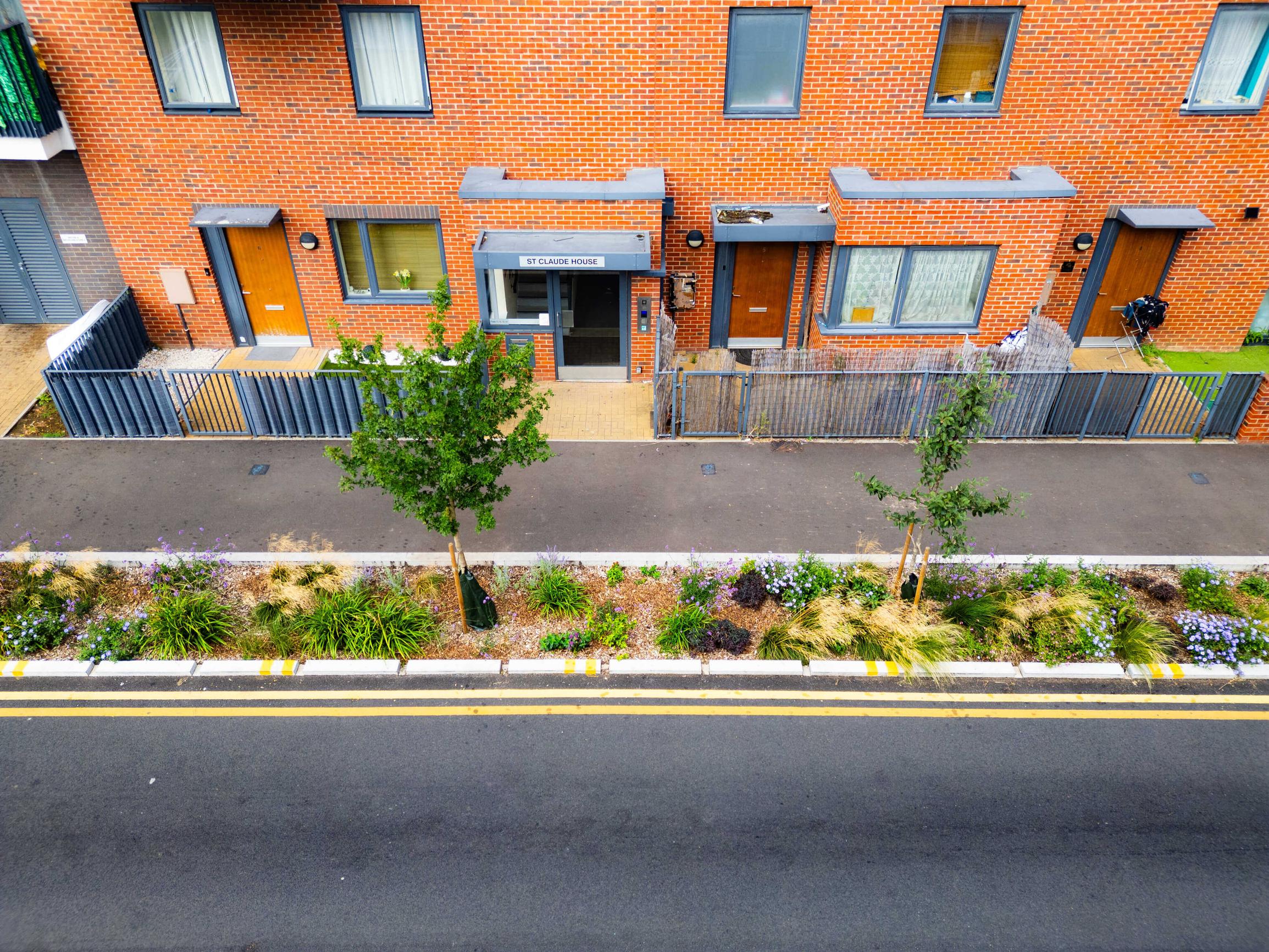
A once treeless, vehicle-dominated street in Waltham Forest has been transformed by rain gardens, widened footways and the removal of parking spaces. Sutherland Road now boasts around 500 square metres of rain gardens, 500 square metres of footway, 68 street trees and 300 shrubs.
Waltham Forest Council said the biodiverse planted areas will improve air quality, reduce surface water flooding, improve urban cooling and provide new habitats for pollinators and urban wildlife.
The public realm project involved Meristem Design, Riney, Wavin Orbia and what:if. Having been totally treeless for more than 100 years, Sutherland Road now has the longest continuous residential rain garden in the UK, says Meristem.
Funding came from the Greater London Authority (GLA), the Community Infrastructure Levy, Section 106 agreements with developers and council investment.
The initiative not only enhances the area’s climate resilience and biodiversity but also fosters a more “accessible and vibrant community space”, aligning with the Greater London Authority’s vision for the Blackhorse Lane Creative Enterprise Zone, says Meristem.
Improvement works included carriageway and junction improvements providing more space for walking and cycling, new and upgraded CCTV cameras, and improvements to Mill Gardens green space.
Public art also features in the scheme, thanks to a project led by what:if and involving young people from Blackhorse Workshop’s Responders and Make Stuff Club programmes.
Inspired by the plants used in the rain gardens, participants created new hybrid flower designs by combining different botanical elements. This resulted in designs called ‘Flowers of Sutherland Road’, which were translated into artworks and installed on metal shutters along the industrial units on the street.
“The transformation of Sutherland Road sets a precedent for similar green transformations in other residential areas, promoting healthier, more liveable streets across London,” says Meristem. “By reclaiming space for nature and people rather than vehicles, the revitalisation of the street encourages walking, cycling and social interaction while enhancing the look and appeal of the neighbourhood.”
Parking spaces were removed from the kerbside adjacent to the affordable Sutherland Road housing scheme, which has low car ownership.
“Addressing historical flooding issues necessitated innovative design solutions and the integration of SuDS [Sustainable Drainage Systems]. Ensuring widespread understanding and support for the changes was critical to the project’s success,” says Meristem.
“The removal of parking spaces to accommodate the rain gardens required clear communication and collaboration with local residents and businesses.
“The project required creative design that had a balance of green infrastructure within a narrow, vehicle-heavy street.”
Find out more about the Sutherland Rd and Forest Rd schemes at Climate Resilient Streets
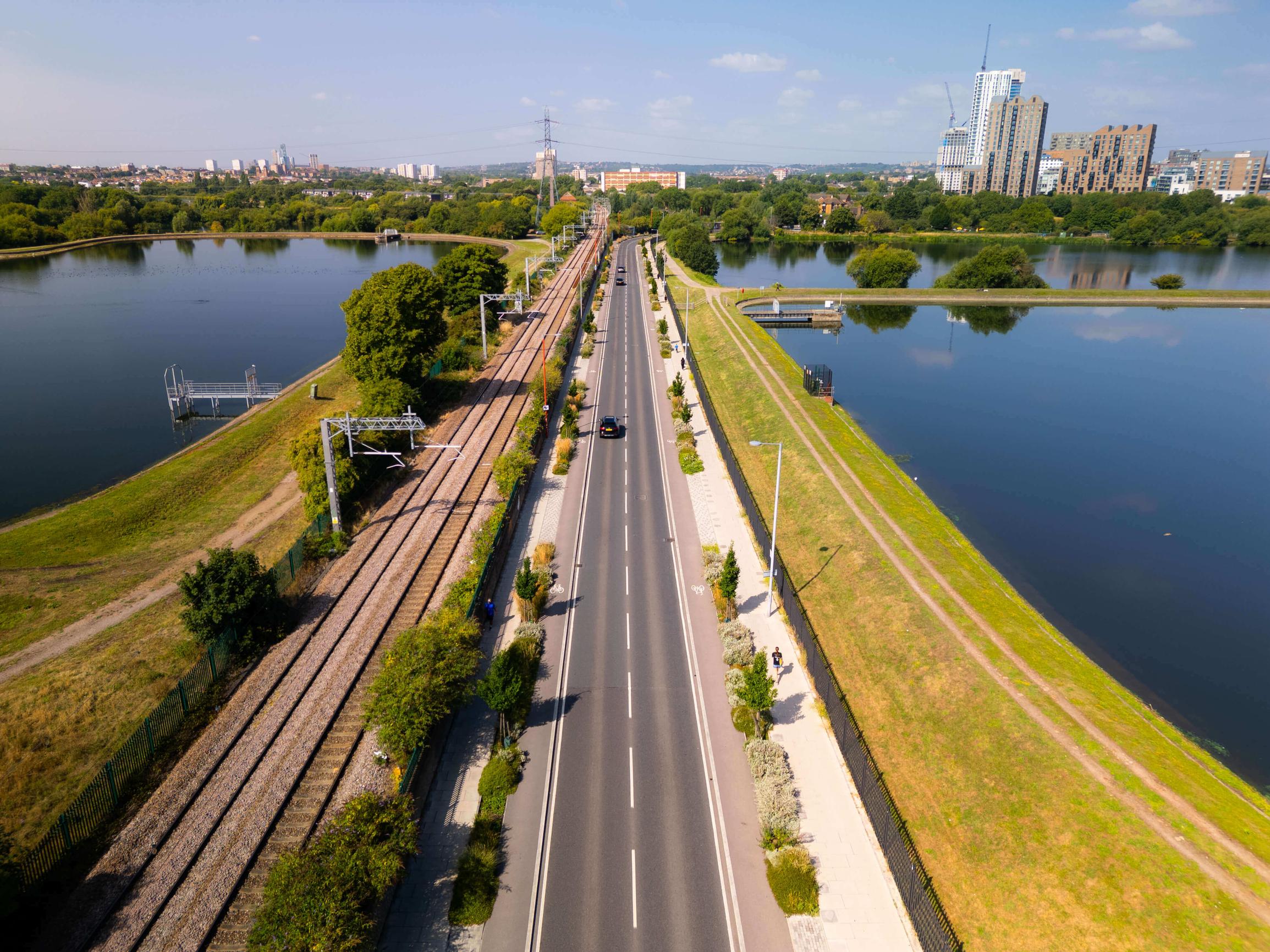
Not far from Sutherland Road, Meristem has also planted rain gardens along a section of Forest Road between Blackhorse Road and Tottenham Hale.
The section of road is now lined with over 600m2 of rain gardens on both sides. The SuDS are home to 30 narrow-forming Hornbeam trees, Carpinus Fontaine trees and over 10,000 plants including grasses, Iris, Lavender and several herbs such as Rosemary and sage. These are hardier plants requiring less maintenance than those on Sutherland Road.
Meristem says: “The sustainable green solution filters urban pollutants and allows for more controlled and effective surface water management. By improving the drainage along the stretch of road has transformed Forest Road into a functional and vibrant space.”
The road is flanked by Walthamstow Wetlands, Europe’s largest urban wetland nature reserve, spanning over 500 acres with ten reservoirs.
The project’s rain gardens run between the footway and segregated cycle lanes. “The rain gardens are also used as a wildlife corridor and biodiversity booster. Used next to a cycle lane, the SuDS create a green barrier between vehicles, pedestrians and cyclists, helping to improve air quality, soften traffic noise and encourage more active travel.”
Meristem adds: “The main benefits have been to target and improve both roads and homes that are known to flood. The greenery not only boosts the quality of public space but also offers an ecological sanctuary, contributing to Waltham Forest’s sustainability goals.”
Walking tours of Sutherland Road and Forest Road will take place during Climate Resilient Streets, hosted by Waltham Forest Council and organised by Landor LINKS, on 3 June.

TransportXtra is part of Landor LINKS

© 2026 TransportXtra | Landor LINKS Ltd | All Rights Reserved
Subscriptions, Magazines & Online Access Enquires
[Frequently Asked Questions]
Email: subs.ltt@landor.co.uk | Tel: +44 (0) 20 7091 7959
Shop & Accounts Enquires
Email: accounts@landor.co.uk | Tel: +44 (0) 20 7091 7855
Advertising Sales & Recruitment Enquires
Email: daniel@landor.co.uk | Tel: +44 (0) 20 7091 7861
Events & Conference Enquires
Email: conferences@landor.co.uk | Tel: +44 (0) 20 7091 7865
Press Releases & Editorial Enquires
Email: info@transportxtra.com | Tel: +44 (0) 20 7091 7875
Privacy Policy | Terms and Conditions | Advertise
Web design london by Brainiac Media 2020
