
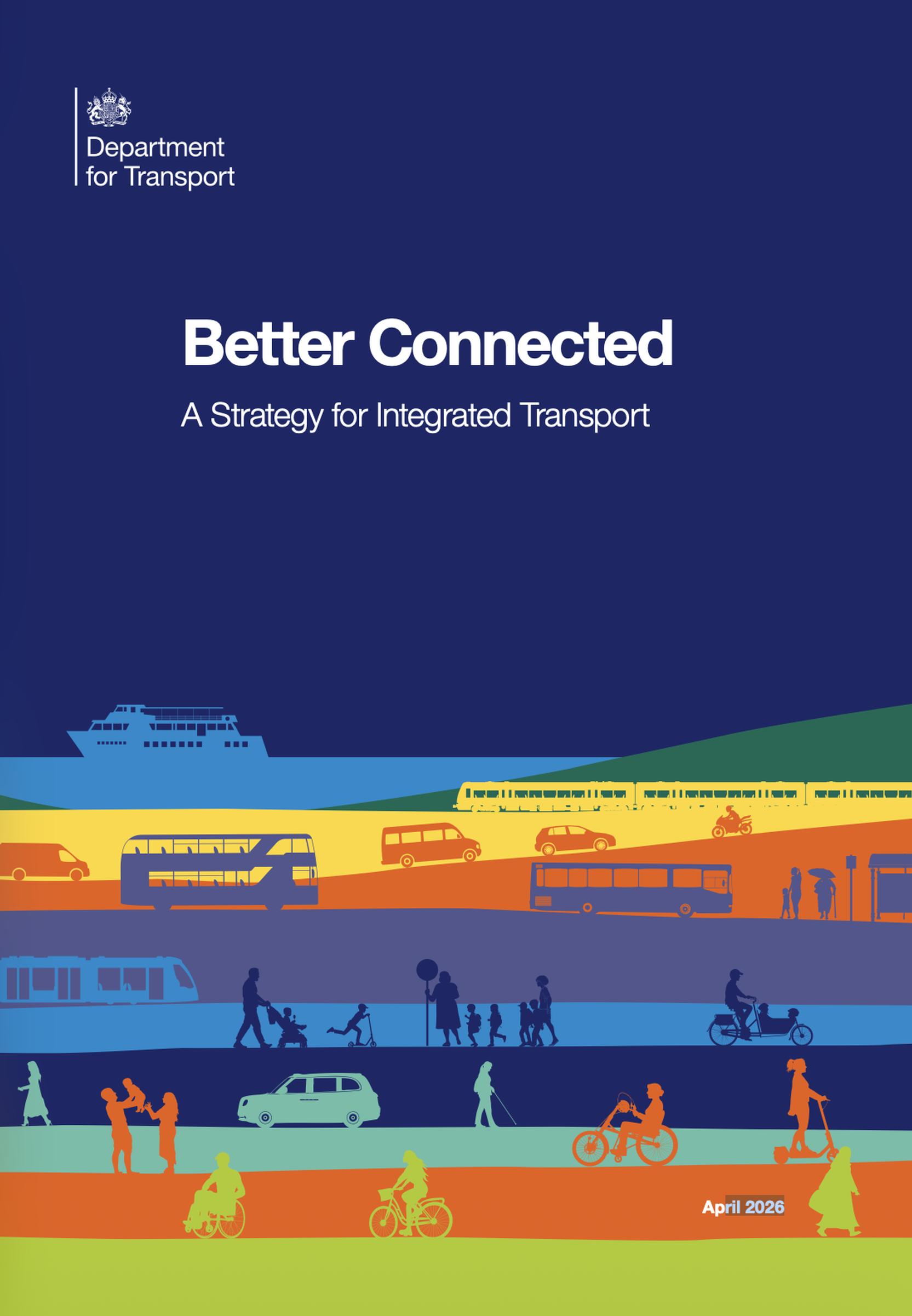
Passengers and drivers should be able to travel seamlessly across Britain without the need to juggle multiple tickets or apps.
This is the key aim of the Better Connected national transport strategy, which seeks to make everyday journeys simpler by making it easier to pay for and more reliable from door to door.
The Department for Transport envisages contactless tap-and-go travel becoming the norm across buses, trains, and trams in cities and towns across England. Local leaders will be given the tools to replicate joined-up systems currently in place in areas like Liverpool, London and Nottingham.
Drivers will benefit from the expansion of the National Parking Platform, allowing them to use any parking app across participating car parks, ending the frustrating experience of having to download a different app each time.
Traffic and technology priorities in the Better Connected strategy are:
The strategy has a strong focus on technology, with contactless ticketing, data and innovation playing a key role. The government has announced a new partnership with Google, allowing passengers across England to track their bus in real-time through Google Maps. The service will be especially useful for passengers in rural areas where bus services are less frequent.
Better Connected features a ‘Mini Switzerland’ pilot in the Peak District’s Hope Valley, backed by £6m of government funding. Taking its name from best practice in European rural areas, the trial will test more frequent, reliable rural bus services timed to connect with arriving trains to support local communities and tourism.
The government is also publishing new local transport plan guidance, giving local leaders clear blueprints for building joined-up transport, making the most of their funding and boosting local growth.
Transport secretary Heidi Alexander said: “For too long, getting from A to B has been more complicated than it needs to be. People want journeys to be easy and reliable. They want to be able to get off a train and straight on to a bus without having to battle through a confusing system or buy separate tickets for each part of their journey.
“That’s why we’re giving local leaders the powers to build transport networks that are simpler, more accessible and better connected, improving everyday journeys and supporting growth in every corner of the country.
“While local leaders will continue to decide whether to invest in contactless, tap-and-go travel, the government has made it easier than ever by providing back-end technical support and long-term funding to bring it to their towns and cities.
“Gold standard examples like Nottingham and Derby’s Ride app, part-funded by government, show what is possible when local leaders are backed to improve local transport. The app allows passengers to plan and pay for journeys on buses and trams, as well as shared transport services, including car clubs, e-scooters and e-bikes – all in one place.”
Better Connected contains a number of announcements and references to the role of parking in provided more connected travel.
National Parking Platform
The DfT says paying for all journeys should be easier, not just on public transport. It will work with all local authorities in England to roll out the National Parking Platform, a system that allows drivers to use one app to pay for parking in any participating area, rather than needing to download a new payment app in each place. This is digital infrastructure designed by government, now operating in the public interest by the not-for-profit National Parking Platform, supported by the British Parking Association.
Beyond simplifying parking payments, the National Parking Platform will explore opportunities to integrate toll payments and other related road charges, as well as linking parking with rail tickets to make park & ride journeys easier, so travellers can drive to a station, park and continue their journey by train. The DfT encourages all local transport authorities in England to take up support to roll out the platform.
Electric vehicle charging
As more people drive and own electric vehicles, there is a need to ensure public chargepoints are accessible to everyone. The DfT has co-sponsored a chargepoint accessibility standard with the Motability Foundation and have passed legislation to enable us to mandate accessibility requirements for public chargepoints in future if needed.
Pavement parking
The DfT says it recognises that pavements are a critical part of the network and says it wants to see physical barriers to travel reduced as far as possible, so that people can move around their streets and access transport more easily. To support this, the government is devolving powers to enable local transport authorities to prohibit pavement parking within their local arease. The DfT will also publish guidance for managing shared cycle and e-scooter parking to support the safe use of streets and pavements.
Station car parks
Rail stations are important community hubs and drivers of local economies and opportunities, connecting people not only to rail but also to buses, walking, wheeling and cycling routes and private transport. Stations act as gateways to an area, attract investment and regeneration and enable housing and commercial development.
Car parks around stations play an important role as interchange points, says the DfT. In some cases, reconfiguring or resizing them can help unlock brownfield land for development while maintaining essential parking. To support this, Network Rail is updating previous analysis to identify opportunities for housing and redevelopment around rail station car parks, where land can be released and parking can instead be provided in new multi-storey car parks or where existing car parking is underutilised.
Cycle parking at railway stations
Great British Railways will ensure that cycle parking is maintained, and where demand exists new cycle parking or new security features are actively considered when it develops its business plans. Active Travel England will develop a framework for assessing the quality and connectivity of walking, wheeling and cycling routes to rail stations, as well as cycle parking provision, in line with best practice approaches for safety and accessibility.
Car club bays
To further develop other types of shared mobility, as part of updating the legislation for traffic signs and road markings, the DfT will consider whether there are changes that could make it easier for local authorities to create dedicated parking bays for car clubs. In addition, it will publish guidance for local authorities on car clubs.
Alex Robertson, chief executive of the independent watchdog Transport Focus, said: “Passengers have told us for years that complexity is one of the biggest barriers to using public transport. Having to juggle different tickets, apps and payment methods for a single journey is frustrating and puts people off leaving the car at home. It’s good to see a transport strategy so focussed on people. Tap-and-go travel, real-time bus tracking and better-connected services will make a genuine difference to people’s daily lives. We look forward to working with government and local leaders to make sure passengers see the benefits of these changes as quickly as possible.”
Claire Ward, Mayor of the East Midlands, said: “This national strategy is a significant step towards the transport system people across the East Midlands want: simple, joined-up and easy to use. We’re already seeing what’s possible through innovations like the Ride app in Nottingham and Derby, bringing journey planning and payment in one place.
“It shows how we can integrate buses, trams and trains so passengers can tap, travel and get where they need to be without juggling multiple tickets or apps. With better real-time information and stronger rural connections, including our work in the Peak District, we can build a transport network that works as one system – supporting growth, cutting congestion and improving access to jobs, education and opportunity across the region.”
Sarah Randall, interim chief executive of the National Parking Platform, said: “This is a hugely positive endorsement of the National Parking Platform and the progress being made across the sector. We’re encouraged to see the Department for Transport reaffirm its support, recognising the NPP as key digital infrastructure that simplifies parking and gives drivers real choice.
“By enabling drivers to use the app they already trust, while supporting innovation and inclusivity across the market, the NPP is helping to create a more connected and user-friendly transport experience. We’re excited to work with local authorities and partners to build on this momentum and deliver even greater benefits in the months ahead.”
Rod Dennis, senior policy officer, RAC, said: “Paying to park a car should be one of the simplest tasks any driver does, but with a plethora of different mobile parking payment apps now in existence things have got a little more complicated. The roll-out of National Parking Platform has the potential to change that, giving drivers the chance to use a single app of their choice. We now need as many operators as possible to join the scheme to make parking easier for everyone."
Sarah-Jayne Williams, director of geo partnerships at Google Maps, said: “We are committed to using data and technology to help people make more sustainable and informed travel choices every day. By integrating real-time bus information across England into Google Maps, we are giving millions of passengers the confidence to plan their journeys accurately.
“This partnership with the Department for Transport ensures that whether you are heading to work or visiting friends, you have accurate, live arrival times right at your fingertips. Making public transport easier to navigate is key to creating a more connected and sustainable future for everyone.”
David Shepherd, chair of the Association of Directors of Environment, Economy, Planning and Transport (ADEPT) Transport and Connectivity Board, said: “Local authorities are committed to creating connected transport networks and have a shared desire to make technology work for people, passengers and place. The Better Connected integrated transport strategy sets out a national framework for achieving this, providing the right powers, funding and technical backing from the government to make that a reality.
“ADEPT members have helped shape this strategy which gives us the tools we need to join up buses, trams and trains in a way that genuinely works for communities. We welcome its strong focus on people, passengers and place, and the recognition that digital technology can transform everyday journeys. Great public transport helps us deliver great places that people can be proud of: we look forward to bringing the Better Connected strategy to life through local transport plans the length and breadth of the country.”
Graham Vidler, chief executive of the Confederation of Passenger Transport, said: “Buses account for two-thirds of public transport journeys and it’s encouraging to see them at the heart of the government’s joined up transport strategy. The initiatives outlined today will help passengers to see when their bus is coming, to pay for their journeys conveniently and to swap seamlessly between different modes of transport.
“Bus and coach operators are already doing a great deal to improve integration – by offering tickets that can be used across different networks and by publishing combined, at-a-glance timetables. Our industry has been at the forefront of work with the West Midlands Combined Authority, and central government, to develop the technology needed to make this a reality nationwide.”
Jacqueline Starr, executive chair and chief executive officer of Rail Delivery Group, said: “This is a major step forward for seamless travel and putting the customer experience at the heart of transport. Over half (58%) of rail customers use a mix of different transport options to start their journey and we know they want simpler, joined up journeys – building on the ambitions outlined in this strategy, we are working with Traveline to make this a reality.
The roll-out of the new digital PlusBus ticket makes it easier to move between rail and bus without the need for multiple paper tickets.”
Jason Prince, director of the Urban Transport Group, said: “The new transport strategy, which includes an ambition to deliver a step change in tap-and-go contactless services for customers, is welcome. The strategy, which has been eagerly anticipated by the sector, builds on the innovative work already underway in devolved areas of the country to deliver better, more joined-up transport networks. The strategy will complement this ongoing work and help to ensure all people across England – from cities to the countryside – are better connected.
Lydia Horbury, chief executive, Bus Users UK, said: “Connectivity is what turns transport into a network. When buses, trains, trams and active travel options join up seamlessly, it transforms confidence, accessibility and everyday journeys. This strategy moves us closer to a system that works around passengers, not the other way round.”
Sue Percy CBE, chief executive of the Chartered Institution of Highways & Transportation, said: “CIHT has long championed the need for an integrated national transport strategy that brings together all parts of the transport system around a clear, people-focused vision. We therefore welcome the publication of Better Connected and the government’s commitment to creating a more joined-up, accessible and affordable transport network.
“The strategy reflects many of the priorities CIHT has consistently highlighted, including the need to simplify journeys for users, improve integration across modes, empower local leaders and ensure transport better supports economic growth, inclusion and decarbonisation. Turning this ambition into delivery will now be critical, and CIHT looks forward to continuing to work with government and partners to help make integrated transport a reality for communities across England.”
Max Sugarman, chief executive, Intelligent Transport Systems UK, said: “Technology has the power to bring different modes of transport together into one seamless network, providing smoother and easier journeys for the travelling public. It is fantastic to see the commitments in this Better Connected strategy, setting out how smart ticketing, journey planning and digital tools like the National Parking Platform can integrate services, simplify payments and give passengers real-time information – ultimately, creating better journeys for all.”
Patrick Mahon, head of policy and public affairs at Action with Communities in Rural England (ACRE), said: “The lack of reliable, affordable public transport in rural areas is a widespread problem which impacts on those in greatest need and holds back economic growth. We welcome the fact that the new integrated national transport strategy explicitly recognises several of the main challenges that face public transport users in rural communities.
“These include the delays and extra costs they encounter when they have to take multiple buses or trains to get to their destination, and the difficulty of knowing when the next bus will actually turn up. The strategy has the potential to deliver a step change for rural transport users, and ACRE looks forward to working with central and local government to ensure that this potential is delivered in practice.”
Rachel Toms, connected neighbourhoods director at Walk Wheel Cycle Trust, said: “We’re pleased to see that improving conditions for walking and wheeling is a key part of the Better Connected transport plan. It's great that the government has committed to allow English councils to install simpler zebra crossings at the end of side roads. When they were tested in Manchester, people driving gave way 65% more frequently.
“Making it straightforward and safer for people to walk, wheel or cycle to the station, or from a bus to a tram can make joined-up public transport and active travel the easy choice for getting around. We're ready to work alongside Government and local leaders to deliver changes like those in this plan, helping communities to be healthier, happier and better connected."
Jools Townsend, chair of the Sustainable Transport Alliance and chief executive of Community Rail Network, said: “An integrated transport strategy is a start, but for the millions trapped by 'transport deserts,' or tipped into poverty by having to run a car, it’s the delivery on the ground that matters. We cannot have a world-class economy built on a third-class, disconnected transport network. We need to seize on this new strategy, alongside devolution and rail and bus reform, to ensure real progress in improving transport for all and tackling our reliance on private cars, which has become a huge factor in the climate crisis, transport poverty, and unequal access to opportunity.”
Richard Dilks, chief executive of CoMoUK, said: “We welcome the government’s goal of expanding shared transport options and mobility hubs in England, which we have long been calling for and are steps in the right direction. The desire to integrate public transport with schemes such as shared bikes, car clubs and e-scooters is positive, including the intention to align Great British Railways with this.
“The strategy acknowledges that these schemes provide an ‘affordable, healthy and lower-emission travel choice’ and should be available to far more people than is currently the case. Making it easier for local authorities to create dedicated parking bays for car clubs would also be welcome, as this would open the way for more towns and cities to embrace them. However, the fact that there is no additional funding or empowerment options given to achieve all this inevitably gives us cause for concern.”
Christina Moe Gjerde, vice president Northern Europe, Voi, said: "E-bikes and e-scooters are becoming an indispensable part of making travel across UK towns and cities easier, cheaper and more reliable. Developments such as this will accelerate that shift. We’ve seen how cities like Oslo, Stockholm and Berlin have already demonstrated the benefits of fully integrated transport networks, where buses, trains and shared micromobility work seamlessly together under a single, unified system.”
Sue Sharp, interim chair, Disabled Persons Transport Advisory Committee, said: “DPTAC welcomes putting people at the heart of this strategy. The traveling public is diverse not only in terms of their personal characteristics, but in where they live, their reasons for travel and the choices they make for their journeys. The strategy recognises that diversity and we look forward to seeing it deliver an effective, accessible and affordable transport network for everyone who needs to travel.
“We are particularly pleased that accessibility, alongside affordability, is one of the guiding principles. Around 18 million people in the UK have a disability. Embedding accessibility from the outset, taking a co-design approach to development and continuing to engage with disabled users throughout, are critical steps in achieving a transport network that is truly accessible and addresses disabled people’s rights to travel.”
Tina McKenzie, policy chair at the Federation of Small Businesses, said: “Small businesses need a reliable, regular and well-connected transport system to allow staff, suppliers and customers to reach them. More joined-up transport networks across England, that allow customers to use different modes on a single ticket would make public transport far more attractive – as long as the services are there.
“For those in rural areas, where public transport is often unreliable and infrequent, being able to track your bus could really improve accessibility and give people much more confidence in using them.
“Parking remains a huge issue for local businesses, particularly on the high street and in our town centres. Measures that make the process of paying for parking easier and less confusing are crucial in attracting customers to our high streets.”
TransportXtra is part of Landor LINKS

© 2026 TransportXtra | Landor LINKS Ltd | All Rights Reserved
Subscriptions, Magazines & Online Access Enquires
[Frequently Asked Questions]
Email: subs.ltt@landor.co.uk | Tel: +44 (0) 20 7091 7959
Shop & Accounts Enquires
Email: accounts@landor.co.uk | Tel: +44 (0) 20 7091 7855
Advertising Sales & Recruitment Enquires
Email: daniel@landor.co.uk | Tel: +44 (0) 20 7091 7861
Events & Conference Enquires
Email: conferences@landor.co.uk | Tel: +44 (0) 20 7091 7865
Press Releases & Editorial Enquires
Email: info@transportxtra.com | Tel: +44 (0) 20 7091 7875
Privacy Policy | Terms and Conditions | Advertise
Web design london by Brainiac Media 2020
