
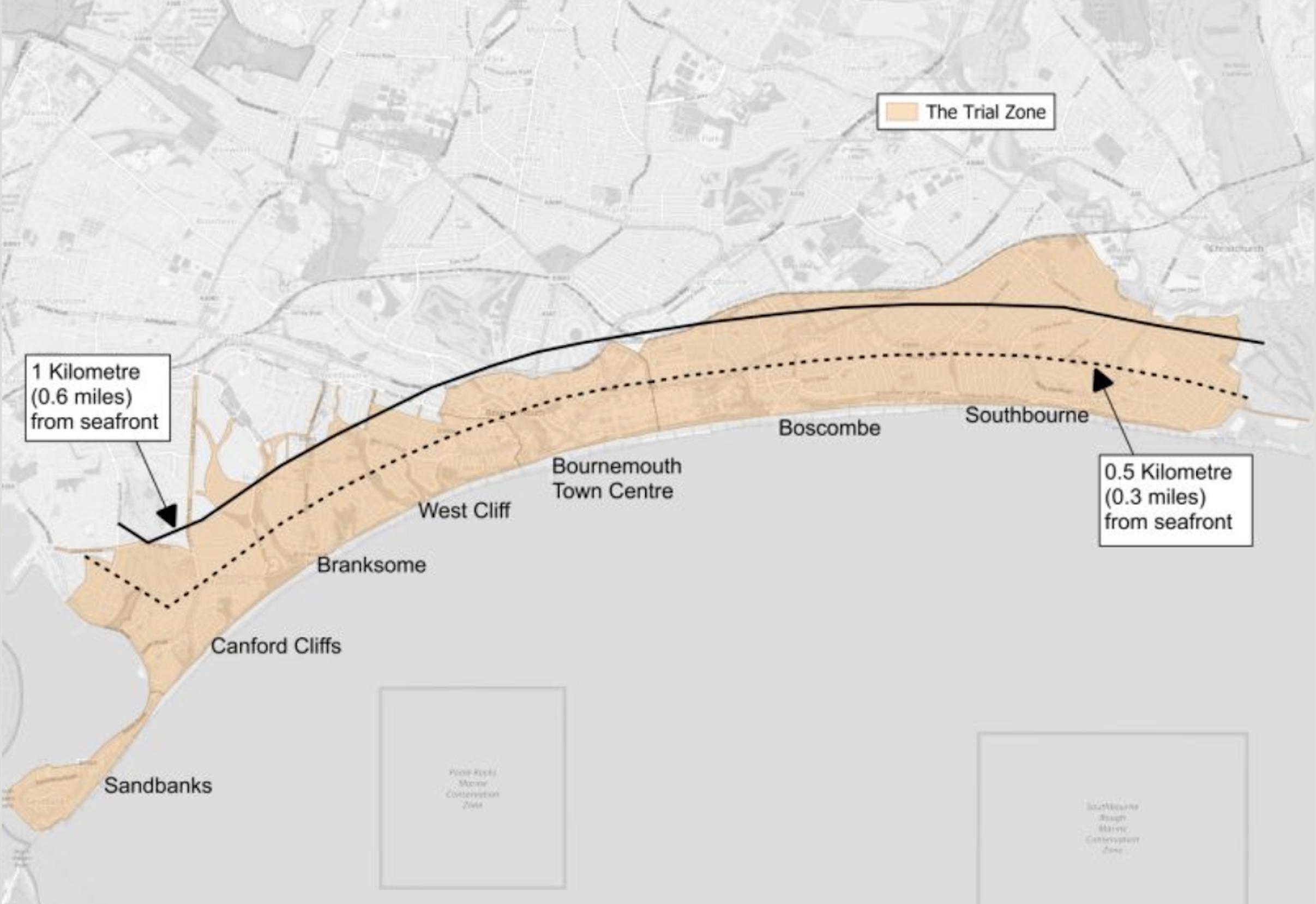
Increasing the cost of penalty notices could help reduce illegal parking in tourist towns, indicates the results of a trial conducted in Dorset last summer. The aim of the trial was to test whether or not higher fines reduced illegal and irresponsible parking along the seafront during the busiest periods.
A report on the month-long trial by Bournemouth, Christchurch and Poole (BCP) Council reveals that illegal and obstructive parking fell significantly and roads became easier for public transport, emergency services and residents to navigate.
Persistent issues with dangerous and irresponsible parking –- particularly during peak summer weekends – were leading to thousands of penalty charge notices (PCNs) being issued in the coastal resorts across the six busiest days during summer months. BCP Council felt the cost of the penalties seem to have lost their deterrent effect.
After lobbying government, BCP Council was given permission by the Department for Transport to issue higher penalty charge notices (PCNs) along roads between Sandbanks and Southbourne during August 2025.
The month-long trial showed that increased fines reduced illegal parking – keeping coastal routes safer, traffic moving more freely, and making BCP’s coastline more accessible for all.
BCP Council concludes that higher PCN levels act as an effective deterrent, reversing upward trends in illegal parking and improving compliance.
Behavioural displacement occurred as some motorists shifted from high-risk on-street contraventions to lower-level breaches in car parks. This highlights a need for complementary measures such as clearer signage and enforcement in designated bays.
There was no evidence of reduced visitor numbers or negative economic impact was found, supporting the feasibility of adopting higher PCN levels permanently.
BCP Council has analysed the data from the trial and submitted a report to the Department for Transport, which will now decide if BCP can implement the higher penalty charges on a permanent basis. BCP Council has also made what it feels are two feasible recommendations for reviewing penalty charge notice policy:
Cllr Mille Earle, leader of BCP Council, said: “Higher PCN levels, implemented along our coastal roads from Sandbanks to Southbourne, helped reduce serious illegal parking, reduced congestion and obstruction on our busy roads , and supported safer, more reliable access for emergency services, public transport, and local residents.
“Importantly, the nationally significant trial achieved this without deterring visitors to our area: reflecting that most people rightly want – and expect – parking to be fair, safe and responsibly managed.
“We recognise the limitations of a short, single-area trial but the evidence shows the effect of higher PCNs and we should be allowed to implement that, again, over a longer period of time.
“This is a really good example of how local authorities can work with Government officials, and constituency MPs, to deliver on resident priorities.
“The results are clear: higher penalties change behaviour, make our roads safer for everyone, our stunning coastline more accessible, and enjoy strong public support.
Writing on LinkedIn, BCP Council’s head of parking Helen Taverner added: “I am proud to have been a critical part of this nationally significant trial to see if increased PCN levels could improve compliance – the short answer is ‘yes’.”
The number of PCNs issued by BCP Council on a monthly basis has been increasing steadily over time. Data for the month of August shows that around 5,800 PCNs were issued in 2019 and had almost doubled by 2024, with 10,510 being issued in that month.
BCP Council reports the pattern is similar for most months, but particularly in the spring and summer months when the weather is warmer. The council suggests the increase could be explained by the fact that the level of fine has remained the same over an extended period of time, whilst levels of income have increased. In essence, fines have become more affordable and less effective as a deterrent.
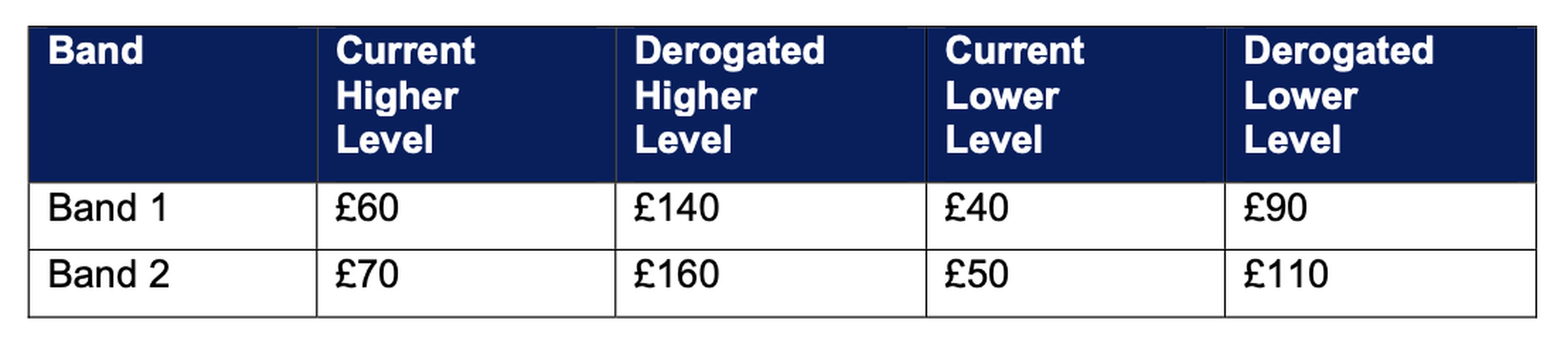
There has been no formal review of civil parking penalty charges in England and Wales since 2008, except for in London, where at the start of 2022 Transport for London (TfL) was granted permission to make a notable increase of its penalty charge levels for parking contraventions on red routes. This increase took TfL’s penalty levels to £160 and followed previous increases in 2011.
The levels of penalty charges outside London are set by the Secretary of State. The levels of PCNs need to be such that they deter illegal parking and encourage compliance with the parking regulations. For the purposes of the BCP Council trial, the Department for Transport considered that parity with the current PCN levels in London would be appropriate:
In both cases, the level of increase is more than double the current rates, which BCP Council suggests, in part, illustrates the level of disparity between London and all other areas, but also indicates that the increase should be of sufficient scale to encourage the desired change in parking behaviour.
The DfT also agreed that additional parking charges during the trial should match the current London levels.
BCP’s report to the Department for Transport sets out key findings from the trial.

TransportXtra is part of Landor LINKS

© 2026 TransportXtra | Landor LINKS Ltd | All Rights Reserved
Subscriptions, Magazines & Online Access Enquires
[Frequently Asked Questions]
Email: subs.ltt@landor.co.uk | Tel: +44 (0) 20 7091 7959
Shop & Accounts Enquires
Email: accounts@landor.co.uk | Tel: +44 (0) 20 7091 7855
Advertising Sales & Recruitment Enquires
Email: daniel@landor.co.uk | Tel: +44 (0) 20 7091 7861
Events & Conference Enquires
Email: conferences@landor.co.uk | Tel: +44 (0) 20 7091 7865
Press Releases & Editorial Enquires
Email: info@transportxtra.com | Tel: +44 (0) 20 7091 7875
Privacy Policy | Terms and Conditions | Advertise
Web design london by Brainiac Media 2020
