
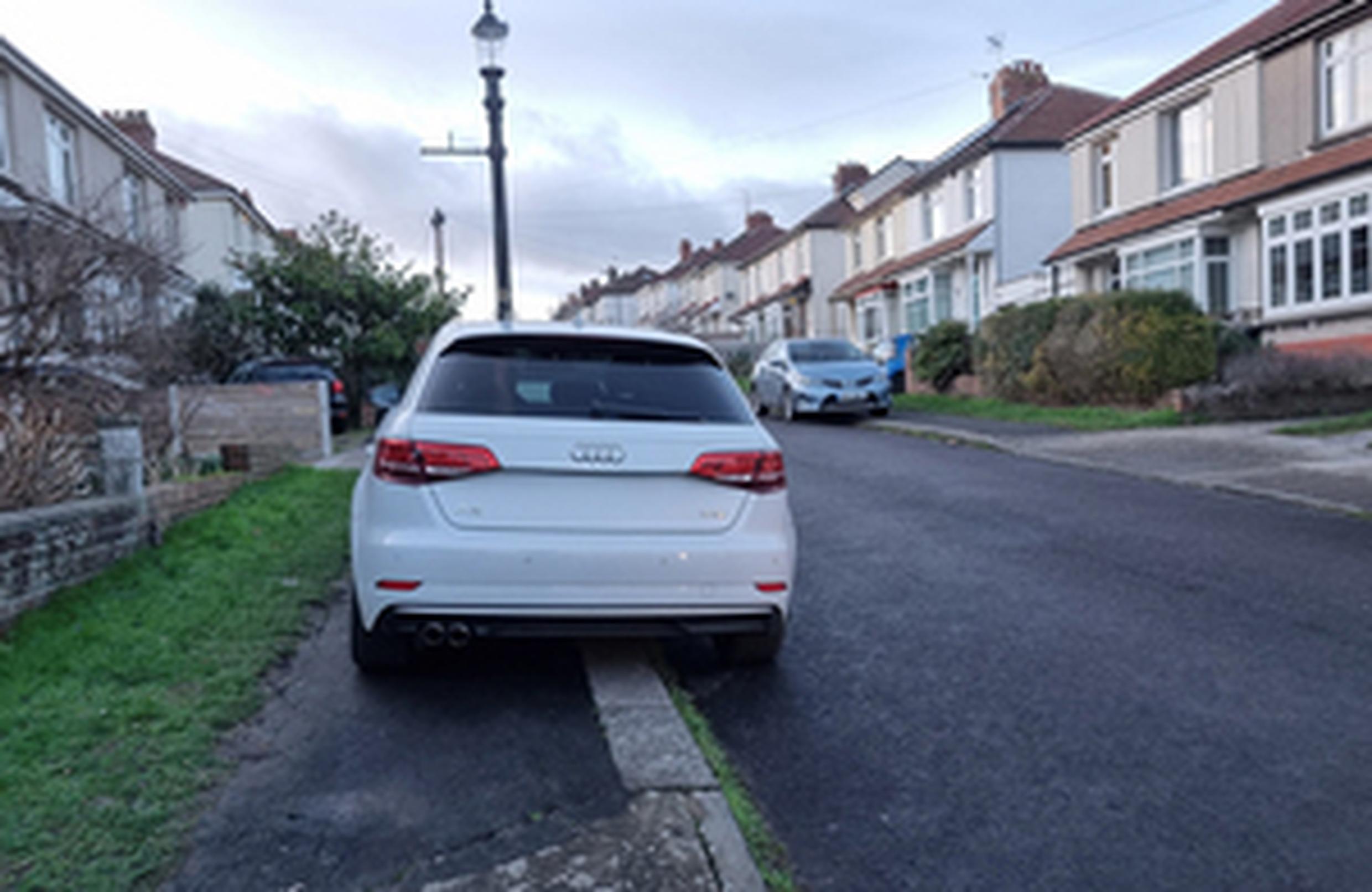
Local authorities across England are to be given powers to introduce pavement parking restrictions across their areas, helping keep them clear and accessible for everyone who uses them, while allowing exemptions where needed.
Following a public consultation conducted back in 2020, the Department for Transport has confirmed that local leaders will be given new legal powers to make it easier to restrict pavement parking across wider areas.
The current approach in England sees action often limited to individual streets, and requires lengthy, complex processes.
The government states that local leaders know their streets best and are best placed to respond to local needs. Under the new approach, local leaders will be able to decide to take action on pavement parking in their area, and they will retain flexibility where they deem pavement parking may still be acceptable.
Local transport minister Lilian Greenwood said: “Clear pavements are essential for people to move around safely and independently, whether that’s a parent with a pushchair, someone using a wheelchair, or a blind or partially sighted person.
“That’s why we’re giving local authorities the power to crack down on problem pavement parking, allowing more people to travel easily and safely and get to where they need to go.”
The department will set out guidance to help local authorities use these powers in a proportionate and locally appropriate way later in 2026.
An evidence review conducted by the DfT last year identified two main options for possible legislative change: enabling local authorities to enforce against an offence of ‘causing an unnecessary obstruction of the pavement’, as deemed by the civil enforcement officer; or introducing a national prohibition on pavement parking, except at locations where local authorities choose to allow it.
Adoption of the localised approach means that there will still be a variety of legal frameworks governing parking on the footway, with a different approach being applied in London, where pavement parking is prohibited unless explicitly allowed. There are also different approaches in Scotland, Wales and Northern Ireland.
Mayor of the West Midlands Richard Parker welcomed the decision to empower local leaders. “Clear pavements matter,” he said. “For parents with pushchairs, wheelchair users and people who are blind or partially sighted, a blocked pavement is not a minor inconvenience – it can stop a journey altogether and is a risk to people’s safety.
“Most drivers want to park safely and considerately and these new powers help in areas where dangerous parking causes real problems. Giving decisions to local leaders means solutions that reflect how our streets actually work. It’s a practical step that helps people move around safely, confidently and independently in their own communities.”
Blocked pavements can create serious barriers for parents with pushchairs, wheelchair users, blind and partially sighted people and older people, limiting independence and making everyday journeys harder and less safe. The announcement of new powers for local authorities was thus welcomed by some of the charities that have been campaigning for action.
Guide Dogs’ chief executive Andrew Lennox said: “After years of campaigning, we welcome the announcement to give councils greater powers to tackle problem pavement parking. Cars blocking pavements are a nuisance for everyone, but especially dangerous for people with sight loss, who can be forced into the road with traffic they can’t see.
“Pavement parking is also a barrier that shuts people out of everyday life. When pavements are blocked, people with sight loss lose confidence, independence and the freedom to travel safely. This stops people accessing work, education and social opportunities.
“We look forward to working with the government and local authorities to ensure these changes are introduced quickly and consistently enforced so pavement parking becomes a thing of the past.”
However, other campaigners gave the announcement a more muted response. Catherine Woodhead, chief executive of Living Streets, said: “These new powers allow for some quick progress after years of inaction and stop many people putting their lives in danger just to get around.
“It’s disappointing not to see a nationwide prohibition, instead handing the power to local leaders to ban pavement parking. This will result in inconsistency for communities and drivers, which increases risks for everyone using our streets. It makes it a political choice, but the fact is, pavement parking endangers lives of the most vulnerable.
“These new powers do not go far enough to protect pedestrians. Disabled people, parents with buggies and older residents shouldn’t have to depend on individual local authorities' appetite and capacity to enforce.
“While national prohibition would offer a clear end to pavement parking, now we can only hope the government’s guidance strongly advises local leaders to act against pavement parking, and we will do our best to ensure this is the case.”
Oliver Lord, head of UK and strategy at the campaign group Clean Cities, welcomed the announcement, but is keen to see rapid action after what has been an extended consultation period of five years.
“It is great to see new powers for councils to end the blight of pavement parking in England,” he said. “This antiquated policy has severely affected people who use wheelchairs, mobility aids or partially sighted and parents pushing buggies for far too long. The UK is finally pushing back on the 'norm' that cars can be plonked where we are all supposed to walk.
“This announcement comes at a critical time too given cars are getting heavier and wider every year making pavement parking even more untenable and dangerous. Maintenance costs increasing too. We shouldn’t have had to wait so long – it is astonishing that this was first consulted on five years ago by the previous government.
“City leaders will now have greater autonomy over how their streets should be managed for their community. Edinburgh Council is already reaping the benefits from an end to pavement parking and showing how cities can continue to thrive.?This government must now ensure that cities have the necessary funding and resources to use these powers. Taken together with their new Road Safety Strategy yesterday, I have greater confidence we will start to see serious changes to the safety and accessibility of our streets.”
From a motorist’s perspective, the proposal to allow local solutions was welcomed by Rod Dennis, the RAC’s senior policy officer, who said: “Our research shows a clear majority of drivers agree that no pavement user should be made to walk or wheel into the road because of someone else’s inconsiderate parking. These proposals should clear the way for councils to prevent pavement parking where it causes problems, but permit drivers to partially park on pavements where doing so helps keep traffic flowing and doesn’t inconvenience other people.”
Steve Gooding, director of the RAC Foundation, said: “This is good news. The clear and obvious principle is that pavements are for people and the new guidance should mean that anyone who wants to walk safely down a footpath can do so, as long as enforcement is rigorous. But it also recognises there are occasional instances where partial parking on paths is not a hindrance to pedestrians and also helps keep roads clear for emergency vehicles. Ultimately this change puts decision making in the hands of those who know local roads and pavements best, the councils who manage and maintain them.”

TransportXtra is part of Landor LINKS

© 2026 TransportXtra | Landor LINKS Ltd | All Rights Reserved
Subscriptions, Magazines & Online Access Enquires
[Frequently Asked Questions]
Email: subs.ltt@landor.co.uk | Tel: +44 (0) 20 7091 7959
Shop & Accounts Enquires
Email: accounts@landor.co.uk | Tel: +44 (0) 20 7091 7855
Advertising Sales & Recruitment Enquires
Email: daniel@landor.co.uk | Tel: +44 (0) 20 7091 7861
Events & Conference Enquires
Email: conferences@landor.co.uk | Tel: +44 (0) 20 7091 7865
Press Releases & Editorial Enquires
Email: info@transportxtra.com | Tel: +44 (0) 20 7091 7875
Privacy Policy | Terms and Conditions | Advertise
Web design london by Brainiac Media 2020
