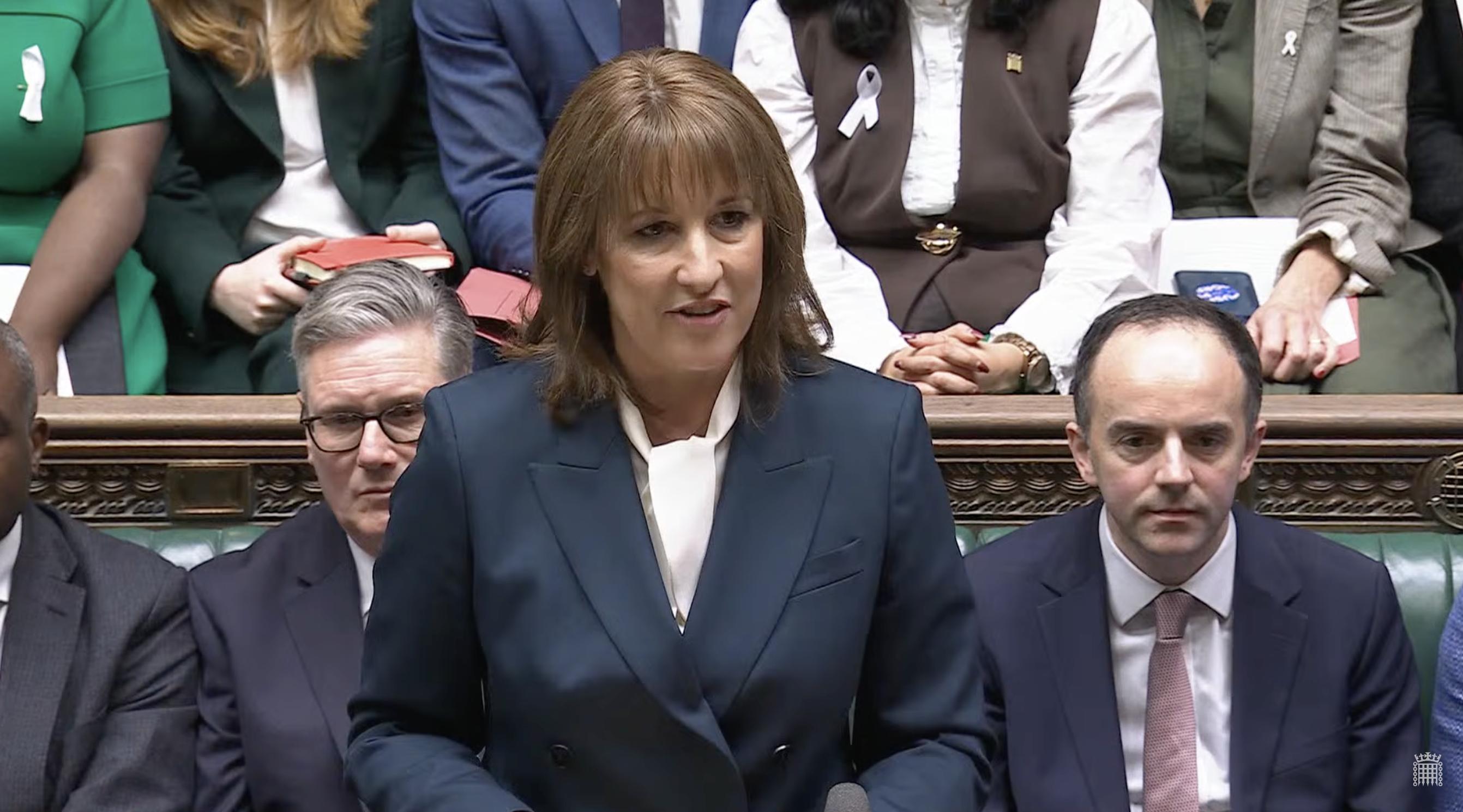
Drivers of electric and hybrid vehicles face a new pay-per-mile charge, the chancellor announced in the Budget.
Chancellor of the Exchequer Rachel Reeves' confirmation that EVs will face a form of road pricing came alongside an expansion of the Electric Car Grant scheme, which supports purchases of qualifying vehicles, and more support for the provision of EV chargepoints.
In a gesture of support for drivers of petrol and diesel vehicles, the chancellor also extended the freeze on fuel duty until September 2027.
The new pay-per-mile scheme for EV drivers is designed to offset a reduction in revenue from fuel duty as more electric vehicles take to the UK’s roads.
Reeves told Parliament: “Because all cars contribute to wear and tear on our roads, I will ensure that drivers are taxed according to how much they drive and not just by the type of car they own by introducing Electric Vehicle Excise Duty on electric cars. This will be payable each year alongside Vehicle Excise Duty at 3p per mile for electric cars and 1.5p for plug-in hybrids, helping us to double road maintenance funding in England over the course of this Parliament.”
The Office for Budget Responsibility (OBR) has previously projected a loss of around £13bn per year by 2030 in fuel duty due to increasing EV uptake as no equivalent taxation for fuel.
Rachel Reeves said that the tax charge will raise around £1.2bn as a result of the new mileage-based charge on electric and plug-in hybrid cars from April 2028, which will be set at around half the fuel duty rate paid by drivers of petrol cars.
EVs will also still have to pay Vehicle Excise Duty (VED).
Electric car drivers will pay a fee of 3p per mile, while plug-in hybrid drivers will pay 1.5p per mile. The rates going up each year with inflation.
Under the measures, an electric car driver clocking up 8,500 miles in the 2028-29 financial year is expected to pay about £255, about half the cost per mile that petrol and diesel drivers pay in fuel tax.
Battery electric vehicles will pay approximately 3p per mile, with charges rising each year in line with inflation. A typical EV driver doing 8,500 miles per year would pay £255 in 2028–29. This is around half the per-mile rate for fuel duty on ICE vehicles.
The OBR expects the new per-mile charge to bring in £1.1bn in the 2028-29 financial year, rising to £1.9bn by 2030-31. The EV pay-per-mile tax is expected to raise around £7bn per year in current prices by 2050–51.
All new cars will have to be electric or hybrid from 2030, when a ban on the sale of new petrol and diesel cars comes into force under the Zero Emission Mandate.
The OBR predicts the pay-per-mile charge was likely to reduce demand for electric cars as it increases their lifetime cost. The OBR said: “To meet the mandate, manufacturers would therefore need to respond through lowering prices or reducing sales of non-EV vehicle.”
The pay-per-mile charge is forecast to result in around 440,000 fewer electric car sales. However, government policies such as the Electric Car Grant may offset around 130,000 of those possible lost sales.
The government is to invest a further £1.3bn into the Electric Car Grant, which allows as much as £3,750 off the price of an EV under £42,000.
The size of the discount is dependant on the UK government’s rules on sustainable production methods of the EVs, with a few vehicles are at the full discount.
The threshold of EVs to be eligible for the Grant is set to rise to £50,000 from April 2026.
Reeves also confirmed that luxury vehicles will be removed from the Motability Scheme, which will refocus on delivering affordable vehicles to the disabled.
There was no change in the VAT paid for charging electric vehicles at public facilities. Public EV charging has a VAT rate of 20%, while domestic charging is taxed at 5%.
The chancellor did commit to extending the 5p cut in fuel duty until September next year, after which it will increase annually by the RPI measure of inflation. Fuel duty has not risen since April 2010. The freeze will cost £2.4bn next year and £900m in the medium term.
A new Fuel Finder tool, launching in early 2026, will help for motorists compare fuel prices at different petrol stations.
Key actions affecting motoring contained in the Budget include:
Rachel Reeves told Parliament: “I will reform our motoring taxes, exempting search and rescue vehicles from Vehicle Excise Duty. And because all cars contribute to wear and tear on our roads, I will ensure that drivers are taxed according to how much they drive and not just by the type of car they own by introducing Electric Vehicle Excise Duty on electric cars.
“This will be payable each year alongside Vehicle Excise Duty at 3p per mile for electric cars and 1.5p for plug-in hybrids, helping us to double road maintenance funding in England over the course of this Parliament.
“And alongside this, I am providing support to boost our British car industry: increasing the threshold for the Expensive Car Supplement on EVs to £50,000, saving over a million motorists £440 a year; providing £1.3bn additional funding for the Electric Gar Grant, extending it to 2030 and taking total funding to £2bn; as well as delaying changes to the Employee Car Ownership Scheme.
“In addition, we’re investing a further £200m to accelerate the roll-out of EV charging, as well as 100% business rates relief for EV chargepoints for the next decade.
“And I will improve competition in our taxi industry by ending ride-hailing companies’ use of a discount scheme intended for coach tours, as called for by Steve McNamara the General Secretary of the Licensed Taxi Drivers Association, legislating to restrict access so that everyone pays fairly and protecting around £700m of tax revenue each year.”
The Budget was focussed on raising more tax revenue without the chancellor being seen to break Labour's election manifesto pledge not to increase VAT or income tax rates or National Insurance paid by 'working people'.
Key elements of the wider Budget included:
These are the tax and regulatory changes set out in Budget 2025: Stronger Foundations, Securing Future:
Electric Vehicle Excise Duty (eVED)
The government is introducing Electric Vehicle Excise Duty (eVED), a new mileage charge for electric and plug-in hybrid cars, with effect from April 2028. Drivers will pay for their mileage on a per-mile basis alongside their existing Vehicle Excise Duty. Electric cars will pay half the equivalent fuel duty rate for petrol and diesel cars, and plug-in hybrid cars will pay a reduced rate equivalent to half of the electric car rate. The government has published a consultation which provides further detail on how eVED will work and seeks views on its implementation. The consultation will remain open until 18 March 2026.
Fuel duty: 2026-27 main rates
The government will extend the temporary 5p fuel duty cut for a further five months, with the cut being reversed in three stages: 1p on 1 September 2026, 2p on 1 December 2026 and 2p on 1 March 2027. This will return rates to pre-March 2022 levels. The planned inflation increase for 2026-27 will not take place, with the government uprating fuel duty rates by Retail Prices Index (RPI) from April 2027.
Electric Car Grant
The government will provide an additional £1.3bn funding for the Electric Car Grant and extend funding to 2029-30.
Local authority chargepoint capability funding
The government will allocate £100m to local authorities and public bodies to accelerate installation of chargepoints where people live and work.
Chargepoint: Infrastructure
The government will invest an extra £100m in EV charging infrastructure, including to support the installation of home and workplace chargepoints.
Cross-pavement EV charging: Permitted development rights consultation
Publication of a Department for Transport (DfT) consultation on permitted development rights for EV charging to accelerate the roll-out of cross pavement charging solutions and make EV charging easier, cheaper and more accessible across England.
Review of public EV charging cost
The government will review the cost of public electric vehicle charging, looking at the impact of energy prices, wider cost contributors, and options for lowering these costs for consumers. The review will start in Q1 2026 and report by Q3 2026.
Business rates 100% relief for eligible electric vehicle charging points and electric vehicle only forecourts
The government is introducing a 10-year 100% business rates relief for EVCPs separately assessed by the Valuation Office Agency and electric vehicle only forecourts to ensure that they face no business rates liability.
Capital allowances: First year 100% allowances for zero emission vehicles (ZEVs) and chargepoints
The government will extend for a further year the 100% first year allowances (FYA) for qualifying expenditure on zero emission cars and the 100% FYA for qualifying expenditure on plant or machinery for electric vehicle (EV) chargepoints. The FYA will now be in place until 31 March 2027 for corporation tax purposes, and 5 April 2027 for income tax purposes.
Company car tax: Employee car ownership schemes
At Autumn Budget 2024, the government announced it would bring employee car ownership
schemes (ECOS) into scope of the Benefit in Kind rules from 6 April 2026. To allow more time for the sector to prepare for and adapt to this change in treatment, its implementation will be delayed to 6 April 2030, with transitional arrangements until April 2031.
Company car tax: Plug-in hybrid electric vehicle (PHEV) tax easement
The government will introduce a temporary benefit in kind tax easement for plug- in hybrid electric vehicles (PHEVs) in the Benefit in Kind system to prevent their tax charge increasing significantly due to new emissions standards. This easement will be in place from 1 January 2025 to 5 April 2028.
Vehicle Excise Duty for cars, vans and motorcycles
The government will uprate Vehicle Excise Duty rates for cars, vans and motorcycles in line with RPI from 1 April 2026.
Vehicle Excise Duty for heavy goods vehicles (HGVs) and the HGV levy
The government will uprate Vehicle Excise Duty for heavy goods vehicles (HGVs) in line with the RPI from 1 April 2026. The government will also uprate the heavy goods vehicle levy in line with the RPI from 1 April 2026.
Vehicle Excise Duty Expensive Car Supplement (ECS)
The government will increase the Vehicle Excise Duty Expensive Car Supplement threshold to £50,000 for zero-emission vehicles only. This change will take effect from 1 April 2026 and will apply to ZEVs registered from 1 April 2025 onwards.
Motability Scheme: Reforming tax reliefs
From July 2026, vehicles leased through the Motability Scheme, or through any equivalent qualifying schemes, will be subject to 20% VAT on top-up payments which are made in addition to the transfer of eligible welfare payments for more expensive vehicles on the scheme. Insurance Premium Tax will also be applied at the standard rate of 12% for insurance related to vehicles leased through the scheme. Tax changes will not apply to vehicles designed for or substantially and permanently adapted for, wheelchair or stretcher users.
DRIVE35
The government will extend funding for the DRIVE35 (Driving Research & Investment in Vehicle Electrification) programme, with an additional £1.5bn to 2035, providing a total of £4bn over the next 10 years
VAT on Private Hire Vehicle Services
Suppliers of private hire vehicle and taxi services will be excluded from the scope of the Tour Operators’ Margin Scheme from 2 January 2026, except where these are supplied in conjunction with certain other travel services.
Vehicle Excise Duty (VED) exemption for search and rescue vehicles
The government will exempt search and rescue vehicles from VED and will work with stakeholders to design and implement an exemption from April 2027.
Annual uprating of the Van Benefit Charge and Car and Van Fuel Benefit Charges for 2026-2027
The government will uprate the Van Benefit Charge and Car and Van Fuel Benefit Charges by CPI from 6 April 2026.

TransportXtra is part of Landor LINKS

© 2026 TransportXtra | Landor LINKS Ltd | All Rights Reserved
Subscriptions, Magazines & Online Access Enquires
[Frequently Asked Questions]
Email: subs.ltt@landor.co.uk | Tel: +44 (0) 20 7091 7959
Shop & Accounts Enquires
Email: accounts@landor.co.uk | Tel: +44 (0) 20 7091 7855
Advertising Sales & Recruitment Enquires
Email: daniel@landor.co.uk | Tel: +44 (0) 20 7091 7861
Events & Conference Enquires
Email: conferences@landor.co.uk | Tel: +44 (0) 20 7091 7865
Press Releases & Editorial Enquires
Email: info@transportxtra.com | Tel: +44 (0) 20 7091 7875
Privacy Policy | Terms and Conditions | Advertise
Web design london by Brainiac Media 2020
