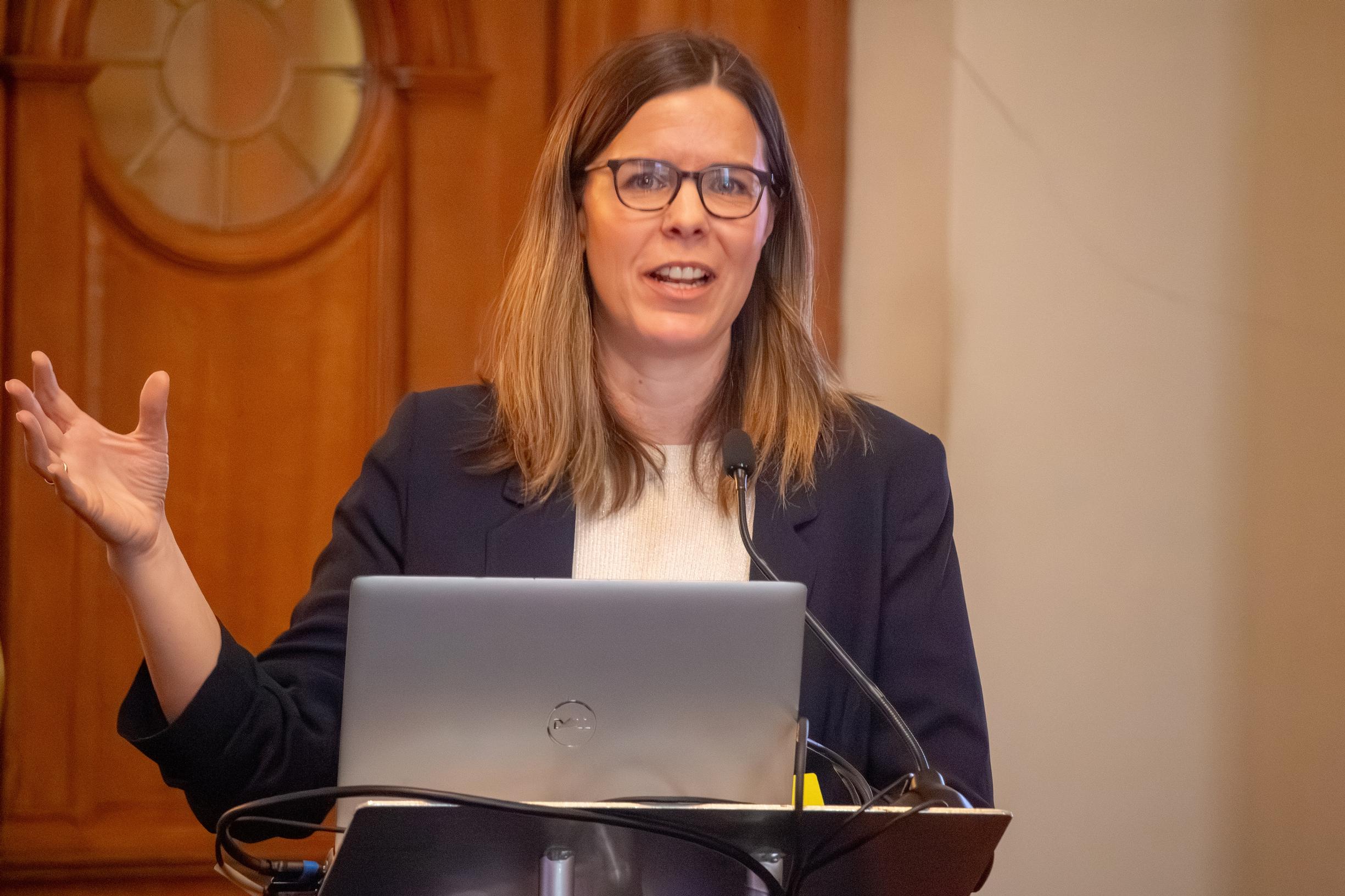
London boroughs implementing School Streets should see buses as key to reducing car use, especially for longer journeys to and from secondary schools, says a senior member of the bus team at Transport for London (TfL).
Speaking at the School Streets South conference, TfL’s Senior Bus Client Manager Sian Houston, said: “Public transport needs to be part of the solution for students travelling further afield.
“Walking and cycling might not be a viable option for everyone. Buses can support longer journeys and crucially promote independent travel among secondary school children.”
She urged councils not to view buses as a dangerous presence on roads. “Per million journeys, buses are the safest mode of transport to choose. So, when you are thinking about putting in School Streets think of buses as being part of the solution. Bus travel is inclusive, it’s accessible and it’s sustainable in terms of emissions.”
Houston acknowledged that each School Streets scheme will vary in its local circumstances and challenges. “Every situation is going to be nuanced,” she said. “So, there’s not one way of fixing these challenges. But plan for buses and encourage the use of buses. And it’s a safe option to use.”
The second tranche of London’s Bus Safety Standard is due to be launched in the spring. Changes to the design and style of new generation buses would be “game changing”, Houston predicted. Better windscreen angles and changes to the shape of the front end of buses means that the impact of collisions involving vulnerable road users will be significantly lessened, she said.
TfL aims for no one to be killed on or by a bus by 2030, Houston reminded delegates. “This target is very ambitious, but the new design of vehicles will fundamentally help to achieve that.”
Alongside this, TfL is running trials over the next year to improve bus shelter design. “These changes will make people feel safer and more visible within the bus shelter. That can include small things like the type of lighting.”
Any street scheme that affects the reliability of bus journeys could drive more people onto less sustainable forms of transport, Houston warned. If bus journey times become more variable “people will lose faith in the system and whether they will get to school on time,” she told delegates.
More congestion means that more buses are needed to ensure the same frequency of services, Houston explained. “This is hugely expensive. Every additional zero emission bus costs about half a million pounds a year to run.”
TransportXtra is part of Landor LINKS

© 2026 TransportXtra | Landor LINKS Ltd | All Rights Reserved
Subscriptions, Magazines & Online Access Enquires
[Frequently Asked Questions]
Email: subs.ltt@landor.co.uk | Tel: +44 (0) 20 7091 7959
Shop & Accounts Enquires
Email: accounts@landor.co.uk | Tel: +44 (0) 20 7091 7855
Advertising Sales & Recruitment Enquires
Email: daniel@landor.co.uk | Tel: +44 (0) 20 7091 7861
Events & Conference Enquires
Email: conferences@landor.co.uk | Tel: +44 (0) 20 7091 7865
Press Releases & Editorial Enquires
Email: info@transportxtra.com | Tel: +44 (0) 20 7091 7875
Privacy Policy | Terms and Conditions | Advertise
Web design london by Brainiac Media 2020