Parking is more than providing provision for vehicles. it’s strategy in action. It’s where policy, mobility and public space meet. Parking can shape dynamic, inclusive, sustainable places. Every bay, permit, or line we manage reflects what our city values – be it access, fairness, efficiency, or environmental stewardship. And, let’s be honest, parking’s the only topic that can unite taxi drivers, cyclists and councillors in passionate debate and I’ve certainly been involved in plenty of those over the years. If you want to start a conversation at a party, just mention double yellow lines or parking charges.
Parking helps us shape communities. When we get parking right, we create spaces that people actually want to spend time in. Places with benches, bikes, greenery – not just rows of bumpers and bonnets.
Parking is the difference between a street that’s just a thoroughfare and one that’s a destination. It’s about shaping communities, not just managing congestion.
Parking is often overlooked, sometimes even vilified, but it’s a critical part of how we design liveable places. It’s where transport meets land use, where policy meets people, and where the everyday meets the strategic. Whether we’re talking about climate goals, accessibility, economic vitality, or urban design, parking is part of the story.
Parking is an important aspect not just to professionals like us, but to the communities we serve. And if you don’t believe me, try suggesting to a local business owner that you remove all parking from their street. You’ll see exactly how passionate people can get!
We know that parking revenue remains vital for many councils, but so does the need to reclaim space for people, for trees, for play. As parking professionals we have a duty to lead in striking the right balance. We’ve seen bold moves – from dynamic pricing to parklets and this must continue to evolve as technology advances. And we’ve seen backlash too. That’s okay.
The question we should all be asking is: Are we designing parking for yesterday’s needs, or tomorrow’s places?
While we’re all working hard to encourage modal shift – getting more people walking, cycling and using public transport – it’s important to remember that this shouldn’t spell the end for parking. Instead, it’s an opportunity to rethink how parking fits into our evolving urban landscape.
Parking still plays a vital role: supporting local businesses, enabling access for those who need it, and providing flexibility for a diverse range of journeys. As travel habits change, parking strategies need to adapt – not disappear. The goal isn’t to eliminate parking, but to make it smarter, more efficient, and better integrated with sustainable transport options.
Let’s talk numbers. In 2024, the total revenue from parking fines across England, according to analysis by the RAC Foundation, was £2.01 billion, which was a 15% increase compared to the previous financial year. But we all know that parking isn’t just about money – it’s how that revenue is reinvested that plays a crucial part in contributing directly to highway repairs, pavement upgrades, and sustainable transport initiatives.
So when someone asks: “Why does parking matter?”, we can say: “Because it funds the very streets we walk, cycle, and drive on.”
In Manchester, moving traffic enforcement generated over £1.1m for the council last year. I’m proud to have been part of that journey supporting Trish Wilkinson, group manager for parking, and the wider Manchester City Council team in implementing moving traffic enforcement. Enforcing moving traffic restrictions is providing money that can be reinvested into better streets, safer crossings, and better infrastructure. Without this vital revenue stream and with more and more pressures to deal with councils are struggling to maintain their assets and invest in future transport schemes.
Parking enforcement is often seen as the “bad cop” of urban management, but in reality, it’s a critical tool for keeping our streets safe, accessible, and efficient. Without it, things can unravel quickly.
Imagine a city where enforcement is absent – no civil enforcement officers, no tickets, no deterrent. At first, it might sound like a driver’s paradise. But let’s look at what actually happens.
A few years ago, Ilford in East London experienced a period where parking enforcement was severely reduced due to industrial action. For several weeks, civil enforcement officers were off the streets. The results were immediate and dramatic and I’m sure none of what I am going to say now will be a surprise:
So, while no one loves getting a parking ticket, the alternative is far worse. Enforcement isn’t about punishment; it’s about fairness, safety and keeping our cities moving.
Of course, it’s not all smooth driving. Parking in the UK faces real challenges:
These are just a few of the challenges the parking industry faces.
Let’s be honest, sometimes penalty charges are about as effective a deterrent as seeing a ‘Beware of the dog’ sign next to a sleeping Chihuahua! Instead they are seen more as the price of admission for a really good parking spot. A discounted parking penalty can translate into around £25 payment to park in a convenient location with prime access to a football match, which breaks down to £5 per person for a car of 5 people. How can this be seen as a deterrent?
So, to overcome these challenges we have to see the opportunities, to innovate, collaborate, and rethink what parking can be. We have to be the people that lead that change.
So, why does parking matter? Because it’s not just about where we leave our cars. It’s about how this shapes our streets, our choices, and our communities. We should ask ourselves: ‘How does this help create better places, not just manage them?’
When we manage parking well, we create space for people, for safety, for sustainability, and for equity. When we get parking right, everything else starts to fall into place. And if we get it wrong, we’ll quickly hear about it on social media.
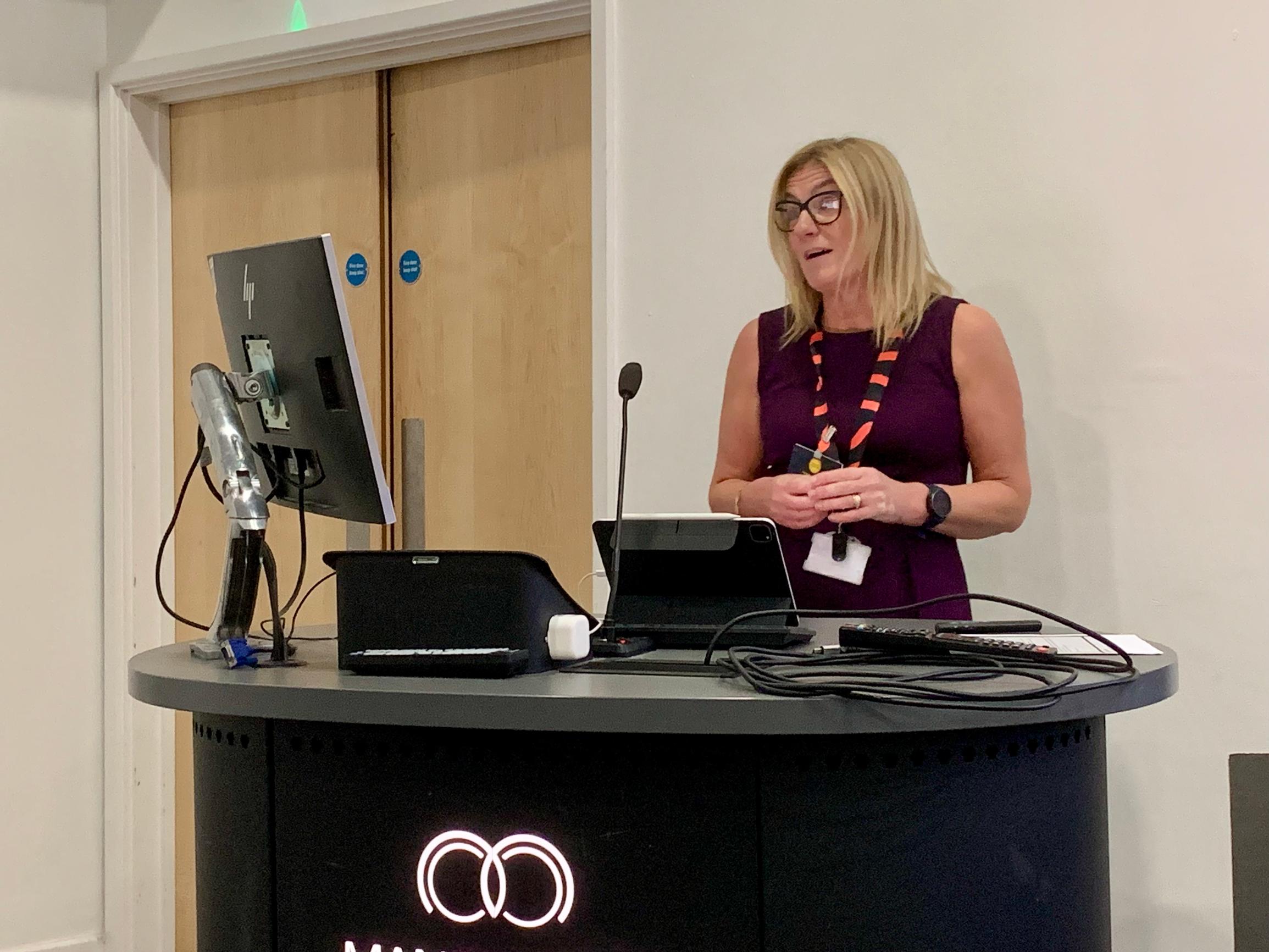
Tina Glover is WSP’s technical director (Liveable Places: regional lead)
Tina Glover was the keynote speaker at Landor LINKS Traffic + Parking 2025 conference
TransportXtra is part of Landor LINKS

© 2026 TransportXtra | Landor LINKS Ltd | All Rights Reserved
Subscriptions, Magazines & Online Access Enquires
[Frequently Asked Questions]
Email: subs.ltt@landor.co.uk | Tel: +44 (0) 20 7091 7959
Shop & Accounts Enquires
Email: accounts@landor.co.uk | Tel: +44 (0) 20 7091 7855
Advertising Sales & Recruitment Enquires
Email: daniel@landor.co.uk | Tel: +44 (0) 20 7091 7861
Events & Conference Enquires
Email: conferences@landor.co.uk | Tel: +44 (0) 20 7091 7865
Press Releases & Editorial Enquires
Email: info@transportxtra.com | Tel: +44 (0) 20 7091 7875
Privacy Policy | Terms and Conditions | Advertise
Web design london by Brainiac Media 2020