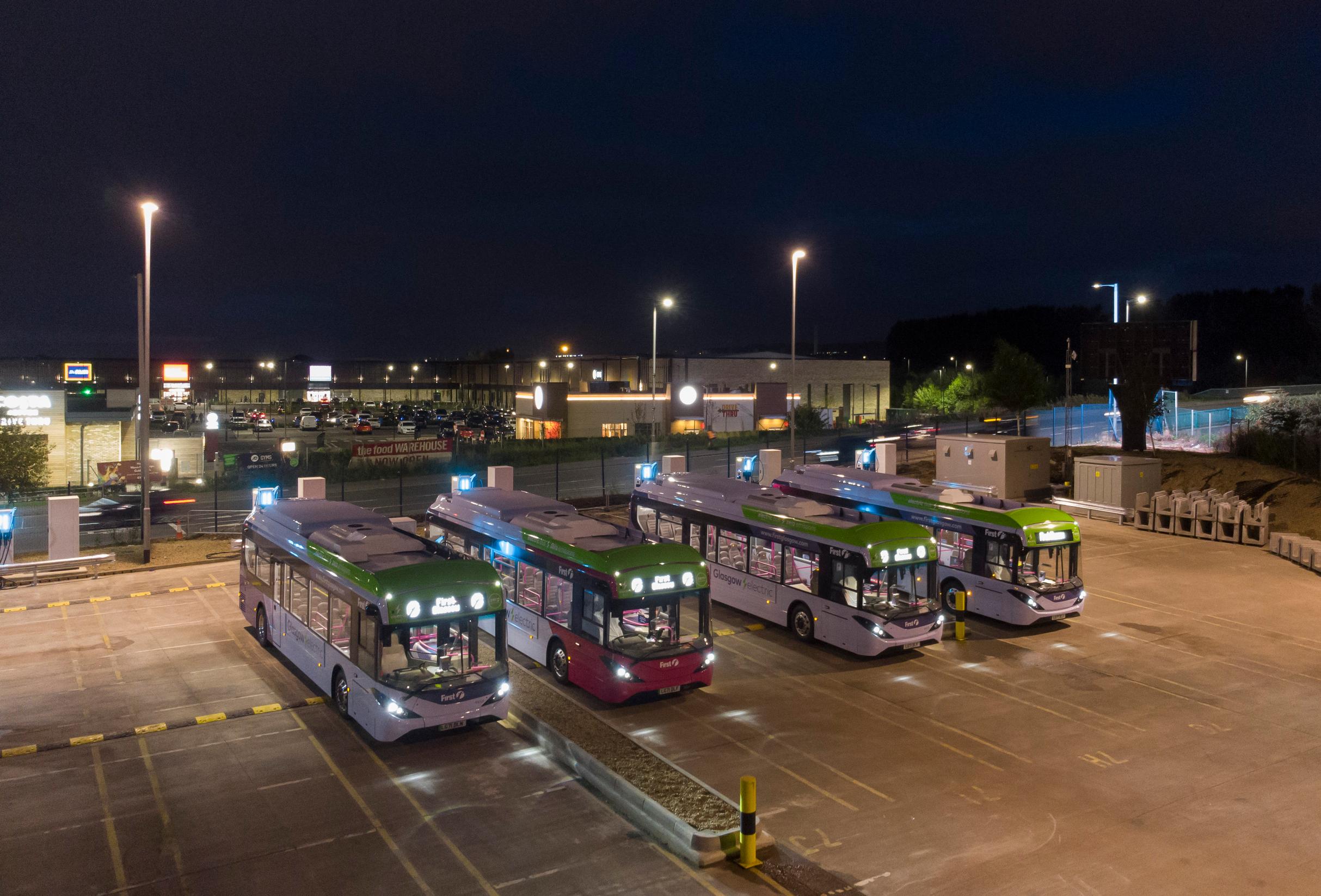
First Bus is trialling the use of its electric bus depots to help balance the UK’s electricity system by adjusting when vehicles charge, reducing wasted renewable energy.
The trial began at the First Bus depot in Glasgow and will also extend to the Great Yarmouth depot in Norfolk later in the spring. It is the first time a UK bus operator has enrolled electric depots into the National Grid balancing mechanism, which balances electricity supply and demand shortly before electricity delivery.
By flexing when buses are charged, the depots can increase demand at times when there is excess renewable energy on the system, particularly wind power in Scotland, and reduce demand during peak periods. This helps reduce the need to curtail renewable generation and supports a more efficient, flexible energy network.
Scotland generates significant volumes of wind energy, but limitations in grid capacity mean some of this power cannot be transmitted to where demand is highest. As a result, renewable energy is sometimes curtailed. By increasing demand at key times, electric bus depots can help absorb this excess energy.
The trial is being delivered in partnership with Optimo Energy, whose platform enables operators to optimise charging in response to real-time grid signals, while ensuring vehicles remain ready for service.
The trial will also explore how depots can participate in additional energy flexibility markets, creating potential new revenue streams while supporting the wider transition to net zero.
Isabel McAllister, chief sustainability officer for First Bus, said: “Electric buses are already transforming public transport, but this trial shows that they have the ability to go even further: playing an active role in the UK’s energy system.
“We’ve built significant electric capacity across our depots, and the next step is using it more intelligently. By charging when the grid needs us to, we can help reduce wasted renewable energy, support system stability and improve the overall economics of electrification.”
First Bus is one of the UK’s largest operators of electric buses, with over 1400 zero-emission vehicles in service, approximately a quarter of its fleet. The company has committed to operating a fully zero-emission commercial bus fleet by 2035 and continues to invest significantly in electrification, including the development of 20 electric depots across the UK, with several more due to be completed by the end of the year.
First Bus has also opened up its depot-based charging infrastructure to third parties via its First Charge offering. This approach supports more efficient use of energy infrastructure and strengthens the role of depots as shared energy assets.
Daniel Homoki-Farkas, chief executive and co-founder of Optimo, said: “Electric fleets like First Bus’s represent a significant opportunity to support the UK’s transition to a more flexible energy system.
“By intelligently managing when vehicles charge, operators can respond to real-time grid needs, helping to reduce renewable energy curtailment, lower system costs and unlock new value from existing infrastructure. This trial is an important step in demonstrating how transport and energy can work more closely together.”
TransportXtra is part of Landor LINKS

© 2026 TransportXtra | Landor LINKS Ltd | All Rights Reserved
Subscriptions, Magazines & Online Access Enquires
[Frequently Asked Questions]
Email: subs.ltt@landor.co.uk | Tel: +44 (0) 20 7091 7959
Shop & Accounts Enquires
Email: accounts@landor.co.uk | Tel: +44 (0) 20 7091 7855
Advertising Sales & Recruitment Enquires
Email: daniel@landor.co.uk | Tel: +44 (0) 20 7091 7861
Events & Conference Enquires
Email: conferences@landor.co.uk | Tel: +44 (0) 20 7091 7865
Press Releases & Editorial Enquires
Email: info@transportxtra.com | Tel: +44 (0) 20 7091 7875
Privacy Policy | Terms and Conditions | Advertise
Web design london by Brainiac Media 2020
