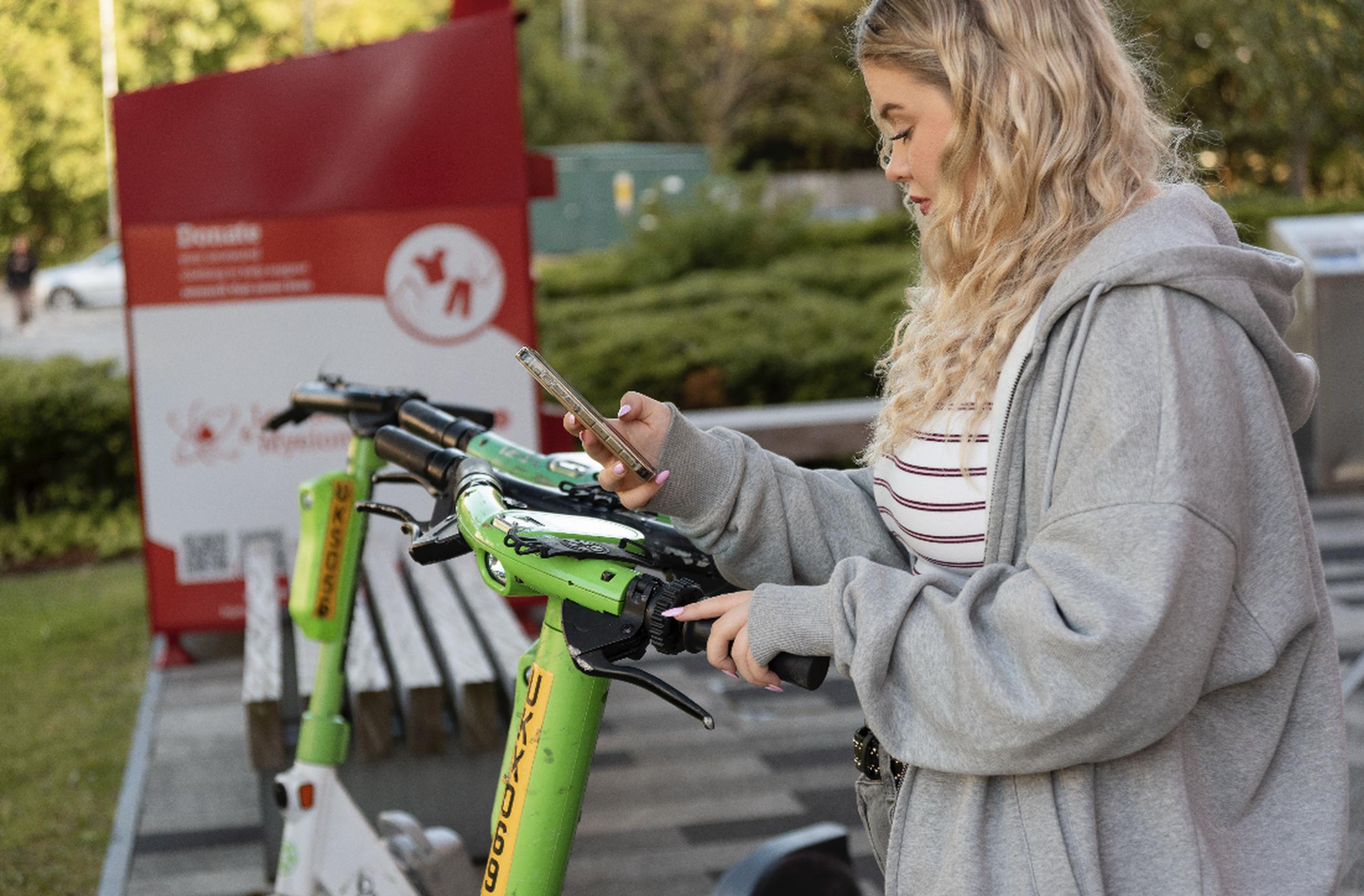
Targeted training and confidence building can significantly increase the use of shared e-bikes and e-scooters by disabled people, a pilot project has found.
The trial in Salford, Greater Manchester, found that more than 50% of participants went on to ride independently within a month of it concluding.
The initiative was funded by the Motability Foundation, delivered by Cycling UK, and led by shared transport charity Collaborative Mobility UK (CoMoUK). It focused on how targeted engagement and skills-building can boost awareness of shared micromobility and support disabled people to use shared e-bikes and e-scooters, which are available as part of the UK’s current on-street fleet.
Working with local operators Lime and Beryl, as well as Transport for Greater Manchester and Salford Council, the project delivered 15 in-person training sessions to 41 participants.
A report about the pilot showed that prior to training, many participants had not used shared micromobility schemes because they did not feel safe, or were unsure how to use the required apps. But following the sessions, 71% of participants said they were likely to use e-bikes independently, with 43% stating the same for e-scooters.
Feedback from the sessions was highly positive, with participants noting that hands-on practice gave them the confidence boost they needed.
One said: “I was surprised by all the misconceptions of e-bikes. It wasn’t what I thought”, while another said they were “easier than I thought they would be”.
Despite these successes, the report highlighted ongoing barriers to the use of such schemes by disabled people, particularly the need to hold a driving licence to ride a shared e-scooter. This requirement disproportionately affects disabled people, and the report recommended that the UK government removes this requirement in forthcoming legislation.
The report also called for inclusive e-scooter training to be rolled out nationally, alongside a set of agreed standards to boost rider skills and confidence. Local authorities should also continue to create safe and inclusive infrastructure for shared micromobility, such as segregated paths and accessible parking bays, it added.
Richard Dilks, chief executive of CoMoUK, said: “This pilot project has provided crucial evidence that disabled people are keen to use shared e-scooters and e-bikes once they are provided with the right support and training.
“It is very encouraging that over half of participants felt confident enough to ride independently shortly after their training sessions, overcoming any initial misgivings.
“However, there is much work still to be done at both a national and local level if we are to make shared micromobility truly accessible to all. For example, the current requirement for a driving licence to access shared e-scooters acts as a barrier that disproportionately excludes disabled people.
“To ensure nobody is left behind, the UK government must remove this requirement, while operators should continue developing inclusive marketing and accessible apps.”
Rohan Kakad, transport solutions manager at the Motability Foundation, said: “This pilot shows that, with the right training and support, shared micromobility services can help more disabled people make everyday journeys.
“It also highlights barriers that still need to be addressed – from accessible training and safe infrastructure to the lack of a clear regulatory framework to support inclusive use. That’s why we’re continuing our research and leading work to inform the future of micromobility regulation in the UK.”
James Scott, director of behaviour change and development at Cycling UK, said: “This pilot reflects what we consistently hear from disabled people: that the strong desire to travel more actively and independently is outweighed by a lack of confidence, familiarity, and trust.
“What this project has proven is that disabled people are ready and willing to use e-bikes and e-scooters when access is designed and delivered with their needs in mind. When we offer people support to build skills in a safe, practical setting, we also provide greater freedom to travel for everyday journeys.
“With practical training, clear information, and a focus on real user experience, shared e-bikes and e-scooters can become a genuinely inclusive part of our transport system, supporting independence rather than excluding it.”
The report on the Salford pilot project is available here
TransportXtra is part of Landor LINKS

© 2026 TransportXtra | Landor LINKS Ltd | All Rights Reserved
Subscriptions, Magazines & Online Access Enquires
[Frequently Asked Questions]
Email: subs.ltt@landor.co.uk | Tel: +44 (0) 20 7091 7959
Shop & Accounts Enquires
Email: accounts@landor.co.uk | Tel: +44 (0) 20 7091 7855
Advertising Sales & Recruitment Enquires
Email: daniel@landor.co.uk | Tel: +44 (0) 20 7091 7861
Events & Conference Enquires
Email: conferences@landor.co.uk | Tel: +44 (0) 20 7091 7865
Press Releases & Editorial Enquires
Email: info@transportxtra.com | Tel: +44 (0) 20 7091 7875
Privacy Policy | Terms and Conditions | Advertise
Web design london by Brainiac Media 2020
