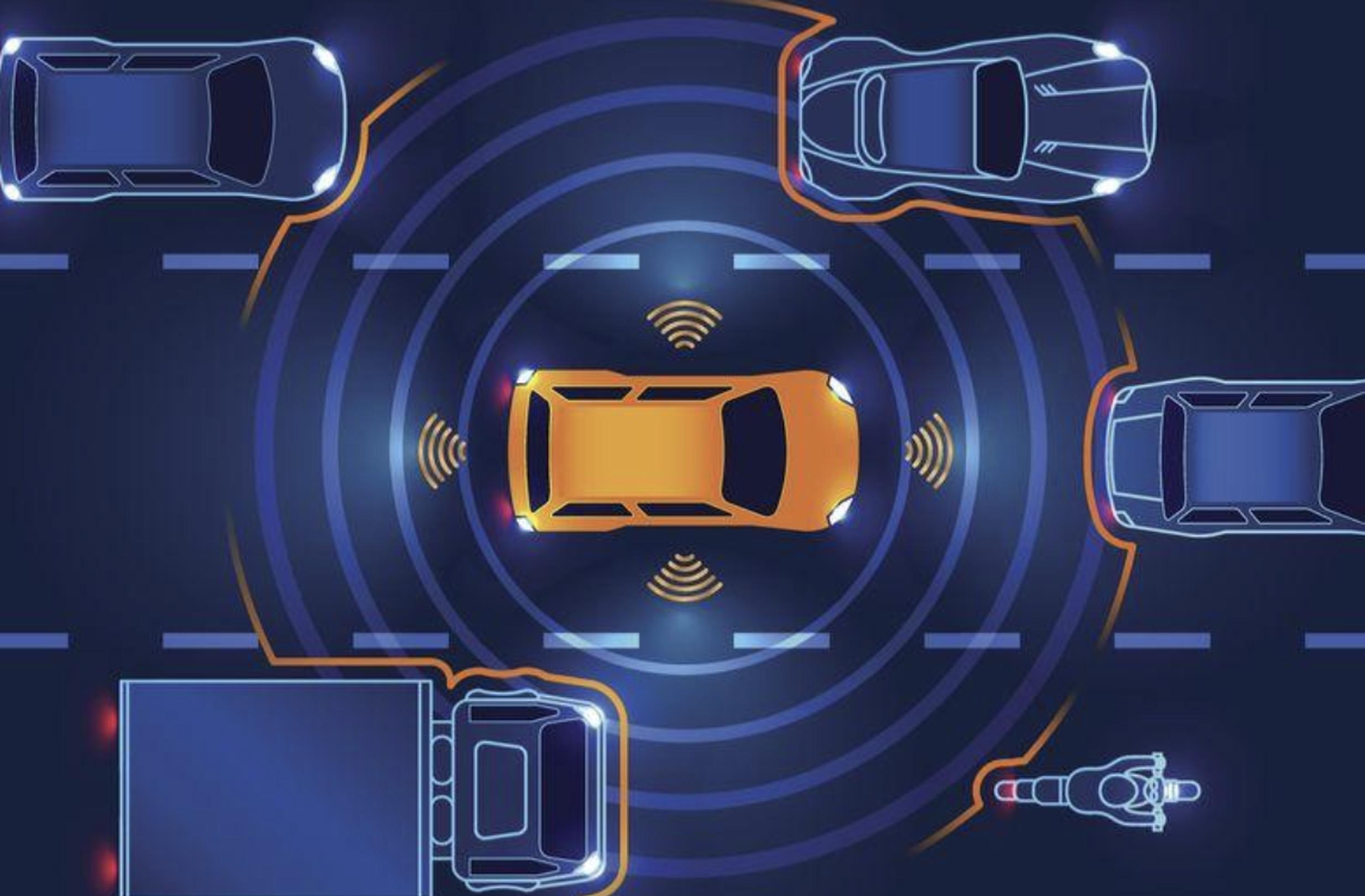

Describing an ‘autonomous vehicle’ as a car is like calling a car a mechanical horse. Cars, in all their forms, are so much more than horses. And AVs are so much more than cars. Using that name to describe autonomous vehicles limits your thinking about what they can do.
Let’s call autonomous vehicles what they really are: The next ‘EVolution’ of public and private shared mobility transport solution for transporting people and goods from point A to point B in a more desirable, faster, safer and environmentally friendly manner that will reduce energy use, reduce noise and air pollution, and so help us reach our climate targets by reducing transport emissions.
See, lots more than a mere car!
Local and national governments should offer incentives for Autonomous Shared Mobility, shared mobility vouchers, as well as car scrappage schemes linked to Autonomous Shared Mobility subscriptions, as an alternative to providing EV grants that encourage private car ownership, which is still pretty high in Europe.
AV subscriptions could help fund autonomous shared mobility that would supplement economically viable traditional public transport, or even completely replace poor undesirable transport services, in what would be an equitable and just transition.
At the moment, the transition does not feel just and equitable when it comes to shared mobility. We can see the results of Zipcar leaving London because councils treated them as a revenue generating opportunity rather than a vital tool in the traffic ecosystem that hopefully Autonomous Shared Mobility can now step into.
Autonomous Shared Mobility should, first and foremost, be a replacement for private car ownership. It will enable us to make better use of our limited resources – steel, aluminium, copper, glass, rubber and, increasingly, lithium. These valuable materials are excessively used in the motor industry on vehicles that are parked unused hoarding.
This is not to mention the wasted manhours and highly skilled workers so urgently needed in other climate adaption industries, for a vehicle that will sit unused for 90%-plus of its lifetime. This is a 20th Century practice that we just can't afford to keep doing if we are to have an equitable future for the whole global population.
The global economic cost of road traffic deaths and serious injuries – which often involve first responder interventions – is substantial, encompassing direct expenses like emergency response (e.g., ambulance, police, and fire services), healthcare and medical treatment, as well as indirect costs such as lost productivity and earnings due to premature death or long-term disability. According to the World Health Organization (WHO), these crashes cost most countries around 3% of their gross domestic product.
Recent estimates place the annual global economic burden of fatal and non-fatal road traffic injuries at approximately $3.6 trillion. This figure aligns with a 3% share of worldwide GDP (currently over $100 trillion) and reflects updated data accounting for the 1.19 million annual deaths and tens of millions of serious injuries worldwide.
In Autonomous Shared Mobility we already have transport technology that can fix the road safety problem. Unfortunately, despite the exact same event resulting in a death or serious injury repeating over and over again, this transport technology fix has not been made mandatory and compulsory with all vehicles on the road requiring retrofitting.
If it was the aircraft industry we would demand a retrofit and planes would be grounded until it happened. But unfortunately we simply do not have the same safety expectations or standards in the motor industry.
Unnecessary deaths and serious have just become socially acceptable with the vulnerable road user often blamed for the avoidable dangerous situation they are put in with friends and family left with decades of trauma or recovery that never heals.
A $100 billion investment in AV development seems like buttons in the grand scheme of things. Especially the ongoing cost to society.
The media has also been irresponsible, and even toxic, in the way it has gone out of its way to damage public perception for this vitality required road safety technology.
For example, The Financial Times recently ran a piece with a negative headline – “Europe doesn’t need driverless cars” – which argued ‘robotaxis’ risked causing congestion in towns and cities with narrower streets while undermining sustainable public transport.
Comments on the effect of December’s power outage in San Francisco on Waymo ‘robotaxis’ did not criticise the poor performance of city authorities, with the blame being too one sided and focussed on the scheme operator Waymo. I think this was slightly unfair to Waymo, who have been extremely responsible with very carefully measured considered deployment of autonomous passenger vehicles.
What was actually exposed by the San Francisco blackout was the failure of public authorities to prepare for large-scale deployments of Autonomous Shared Mobility. Their response has been to treat this is an afterthought, while many commentators have been reactionary.
“When it comes to traffic, the only thing worse than a single-occupancy car is a zero-occupancy one.”
So said Jack Stilgoe, Professor of Science and Technology Policy at University College London, in the wake of news that ridesharing services such as Uber and Lyft are intending to pilot ‘robotaxis’ in London, the Professor was sceptical about benefits of autonomous shared mobility platforms, and stressed challenges to their adoption.
“There's a big difference between having a few test vehicles using public streets as their laboratory and a fully developed, scaled-up system that becomes a real transport option for people,” Professor Stilgoe told the BBC.
Looking to the future, the media could play a very positive role to play in nurturing public perception and confidence in development of Autonomous Shared Mobility technology and understanding of its potential benefits.
What is needed are positive counter points that could include: AI traffic management; social nudge and behavioural change incentives that enable better shared connections with riders; and the use of autonomous vehicles for postal, parcel and cargo pick-up and delivery services as well as passenger services.
Aeravai, the Autonomous Electric Road & Air Vehicle Association of Ireland, has sought to make the positive case for Autonomous Shared Mobility in pre-Budget submissions to both the Irish Government and the UK’s Chancellor Rachel Reeves.
Another positive use case when not carrying passengers or cargo is for autonomous vehicles to act as a giant mobile battery for storing excess renewable energy storage generated during peak solar and wind generation, or for feeding electricity to the grid when needed, especially during emergency situations during blackouts or storm.
Here is an example from Ireland, where the community in Dunmore, Galway, was cut off from the national grid 15 days after last year’s Storm Éowyn.
Meanwhile buses could have been used, but there currently appears to be no joined-up thinking between Transport Infrastructure Ireland and EirGrid Ireland, leading to negative stories about electric bus fleets being mothballed because they cannot be recharged.
With climate impacts getting worse this is the sort of joined up thinking that will be urgently needed. Currently 40% of Scotland’s wind energy is going to waste and has to be turned off.
Vehicle-to-grid energy sharing is the sort of joined-up thinking and integration I am talking about. AVs are way more than JUST CARS!
We need to start by demanding more accountability from city authorities. The recent blackout exposed San Francisco has having no Plan B for emergency situations, which is not exactly reassuring for a city expecting ‘The Big One’. Those vehicles could be an invaluable asset.
Fail to prepare, prepare to fail, and failing we are!
Cormac McKay is an environmental technologist and policy advisor. He is the founder of Aeravai, the Autonomous Electric Road & Air Vehicle Association of Ireland.

TransportXtra is part of Landor LINKS

© 2026 TransportXtra | Landor LINKS Ltd | All Rights Reserved
Subscriptions, Magazines & Online Access Enquires
[Frequently Asked Questions]
Email: subs.ltt@landor.co.uk | Tel: +44 (0) 20 7091 7959
Shop & Accounts Enquires
Email: accounts@landor.co.uk | Tel: +44 (0) 20 7091 7855
Advertising Sales & Recruitment Enquires
Email: daniel@landor.co.uk | Tel: +44 (0) 20 7091 7861
Events & Conference Enquires
Email: conferences@landor.co.uk | Tel: +44 (0) 20 7091 7865
Press Releases & Editorial Enquires
Email: info@transportxtra.com | Tel: +44 (0) 20 7091 7875
Privacy Policy | Terms and Conditions | Advertise
Web design london by Brainiac Media 2020
