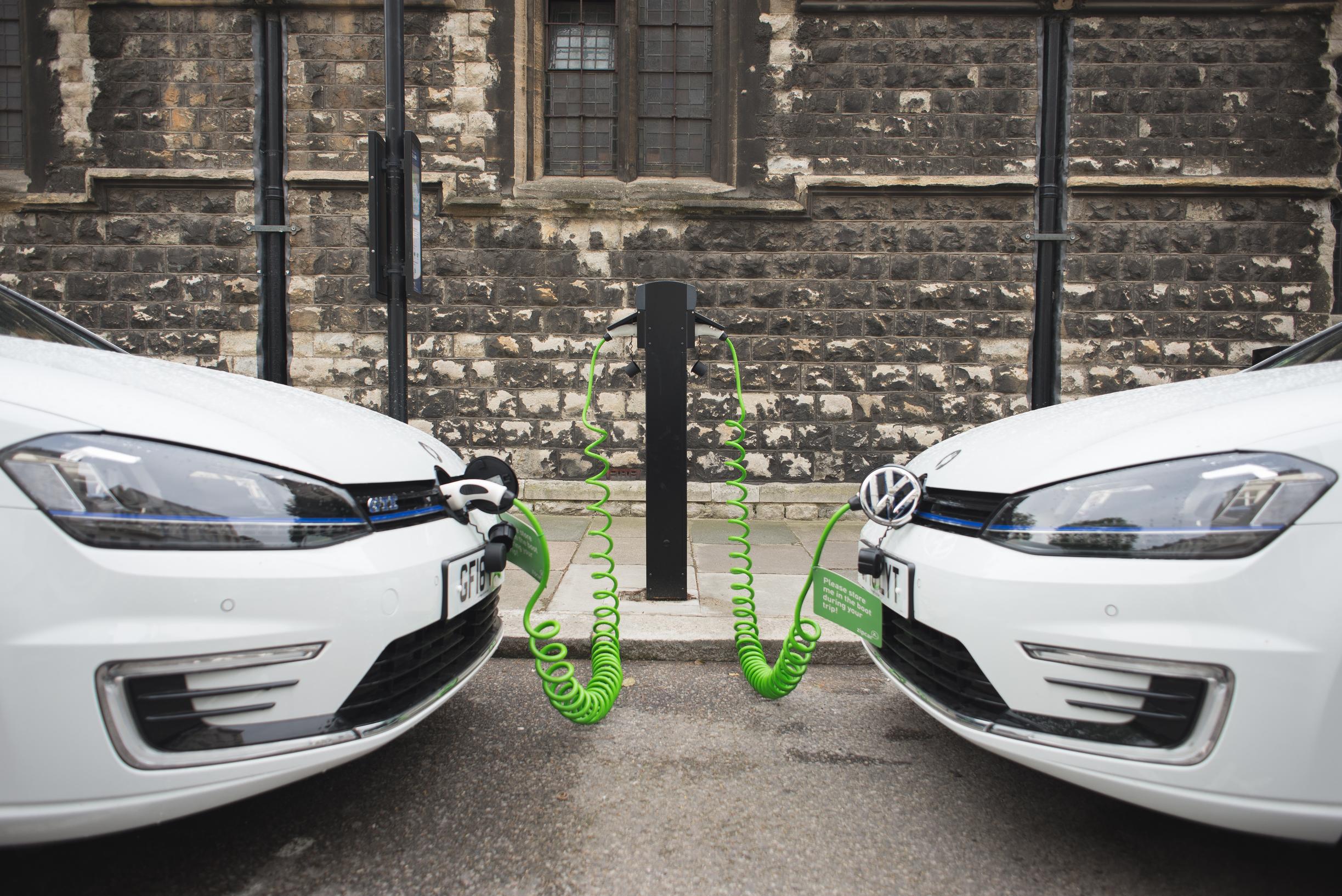

Electric vehicles will lose the 100% discount they receive when travelling through London's Congestion Charge zone when new tariffs are introduced in the New Year.
While there will be exemptions for car clubs EVs operated on a 'return to base' basis, the organisation representing the shared mobility sector these are just a handful of the capital's car club EV fleet.
The cost of London’s Congestion Charge is to rise to £18 from January 2026, it has been confirmed by the Mayor of of London and Transport for London.
The 100% discount offered to electric vehicles entering the Congestion Charge zone will be cut to 25%.
This decision has led to concerns being expressed by car clubs and advocates of EVs.
However, concerns have been raised about the impacts of the changes on car clubs and the uptake of electric vehicles. Collaborative Mobility UK (CoMoUK), a shared transport charity, has warned that the changes could force car clubs to increase costs for customers. The only car club vehicles that will be exempt from paying the Congestion Charge will be EVs based within the zone, which must be returned to the same parking bay after use. One car club currently operating in London previously estimated that the impact of these two policies will cost it around £878,000 on average over the next five years.
Richard Dilks, chief executive of CoMoUK, said: “While it is welcome that car club EVs resident in the Congestion Charge Zone will not be charged, this covers just a handful of vehicles, and so is a very small reduction compared to the overall increased financial cost of these measures. These plans load more cost onto the capital’s car club fleet and risk denying Londoners and visitors access to shared cars that cut costs and emissions – and in particular to shared EVs.
“As well as enabling users to live a car-free or car-light lifestyle, our research has shown that each car club vehicle replaces 31 private cars in the capital, freeing up space, cutting congestion and improving air quality. They also make a big contribution to reducing car ownership and mileage, with members more likely to embrace active travel and public transport too.
“We urge the Mayor and TfL to stop treating shared cars as if they are privately-owned ones, which is completely illogical and a disservice to Londoners.”
However, TfL states that drivers of electric vehicles will still be able to pay less via the Cleaner Vehicle Discount (CVD). Since the CVD was introduced in 2019, the number of EVs registered has risen almost sixfold – from around 20,000 to more than 116,000 earlier this year – they will account for close to 20% of all vehicles in the Congestion Charging Zone by the end of the year.
The new CVD system means that:
To make it easier for drivers to access the CVD, it will be applied automatically from DVLA data, customers do not have to separately register and prove a vehicle is electric. Drivers with eligible vehicles will simply need to sign up to Auto Pay to receive the discount.
Christina Calderato, TfL’s director of strategy, said: “If we want to ensure that London remains a thriving city for everyone to enjoy, then it’s vital that traffic and congestion is kept under control and managed effectively. The changes to the Congestion Charging scheme play a key role in allowing us to do that, while striking a careful balance that enables drivers, businesses and other organisations to continue transitioning to cleaner vehicles and more sustainable forms of transport.”
Mayor of London Sadiq Khan said: ”Keeping London moving by reducing congestion is vital for our city and for our economy. While the congestion charge has been a huge success since its introduction, we must ensure it stays fit for purpose, and sticking to the status quo would see around 2,200 more vehicles using the congestion charging zone on an average weekday next year. We must support Londoners and businesses to use more sustainable travel, so I'm pleased that substantial incentives will remain in place for Londoners who switch to cleaner vehicles, as we work to build a greener and better London for everyone.”
Alongside the new tiered system, the Residents’ Discount will change to incentivise longer term take-up of EVs, with those currently living in the area remaining unaffected. Those who are in receipt of the Residents’ Discount prior to 1 March 2027 will retain their 90% discount, regardless of vehicle fuel type. For those newly applying for the Residents’ Discount after 1 March 2027, the 90% discount will only apply to EVs.
Based on feedback from the public consultation, there will be further support for low-income and disabled residents receiving certain benefits, so that they can continue to apply for the Residents’ Discount until March 2030 without their vehicle needing to be electric.
In order for residents who live within the charging zone to continue to apply for the Residents’ Discount until March 2030 without their vehicle needing to be electric, they will need to be in receipt of one of the following benefits:
There will also now be a new 100% discount for ‘back to base’ electric car club vehicles. This is for car club EVs that are hired from and returned to the same marked parking space within the zone. This will give residents – including those on low incomes without EV access – an option to use one for essential car journeys.
Changes to the Mayor’s road user charging guidance are also being taken forward, which would allow the Congestion Charge to be increased in line with Tube fares (or inflation plus one per cent or a lower amount) without consultation.
TfL says this new procedure will ensure consistency with the approach that applies when public passenger transport fares are set, meaning the Mayor can ensure that public transport does not become proportionately more expensive than driving in central London. The wider changes now mean that procedural and administrative changes to the scheme may also be made without consultation, and the minimum consultation periods that apply when making other types of changes, have been reduced.
The changes in the Congestion Charge have been welcomed by climate and air quality campaigners.
Izzy Romilly, sustainable transport manager at climate charity Possible, said: “Tying the Congestion Charge to public transport fares is welcome. It’s only right to make sure that public transport doesn’t get disproportionately more expensive than driving. We’re also pleased to see new support for electric car clubs. We need to cut traffic and invest in accessible and affordable public transport, and make sure Londoners can walk, wheel and cycle safely. This will put us on the path to a healthier, fairer London - reducing air pollution and making the city safer for everyone.”
Jemima Hartshorn, Mums for Lungs: “We welcome the news that the Mayor of London is increasing the cost of the congestion charge, and ensuring future rises happen in line with Tube fare rises. Almost half of London’s household don’t have a car and while tube and rail fares increase regularly, this charge hasn’t been increased for six years. London is still far too polluted and there are too many cars in central London causing congestion. Last year more than 120,000 children attended hospital struggling to breathe. Today’s announcement is another good step, and we urge the Mayor and government to work together to clean up our air from all sources across London and the country.”
Muniya Barua, deputy chief executive at BusinessLDN, said: “City Hall and Transport for London have made great strides in improving air quality in the capital whilst also supporting the transition to electric vehicles (EVs) across the city. The Cleaner Vehicle Discount (CVD) has played an important role in driving uptake but it’s not job done and given the Mayor’s ambitious net zero target, now is not the time to reduce the level of support. It’s vital these changes do not cause the transition to EVs to stall and we look forward to working with City Hall and TfL to explore other practical steps that can incentivise more people to make the switch, while ensuring the capital keeps moving.”
Guy Bartlett, chief executive of EV chargepoint operator Believ, said: “While we're disappointed to see the roll back of the Cleaner Vehicle Discount, which risks slowing momentum in London’s EV uptake, we remain fully committed to supporting the transition to EVs. Believ will continue working with partners across the capital to install reliable, accessible and convenient EV charging, helping to keep London moving towards a cleaner, greener future.”

TransportXtra is part of Landor LINKS

© 2026 TransportXtra | Landor LINKS Ltd | All Rights Reserved
Subscriptions, Magazines & Online Access Enquires
[Frequently Asked Questions]
Email: subs.ltt@landor.co.uk | Tel: +44 (0) 20 7091 7959
Shop & Accounts Enquires
Email: accounts@landor.co.uk | Tel: +44 (0) 20 7091 7855
Advertising Sales & Recruitment Enquires
Email: daniel@landor.co.uk | Tel: +44 (0) 20 7091 7861
Events & Conference Enquires
Email: conferences@landor.co.uk | Tel: +44 (0) 20 7091 7865
Press Releases & Editorial Enquires
Email: info@transportxtra.com | Tel: +44 (0) 20 7091 7875
Privacy Policy | Terms and Conditions | Advertise
Web design london by Brainiac Media 2020
