
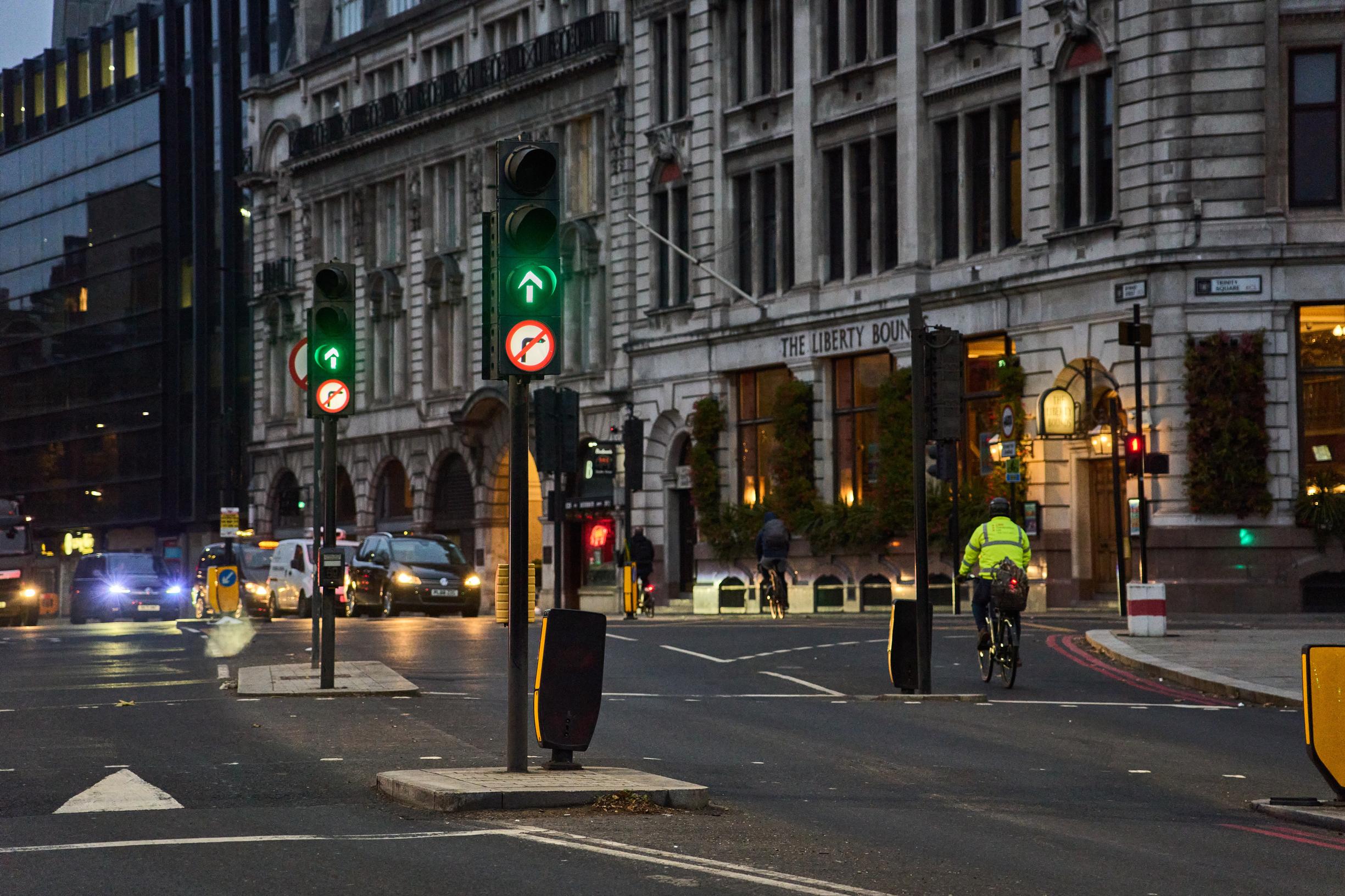
Transport for London (TfL) has announced its first pan-city roadworks plan. ‘London on the move’ will focus on using innovation to deliver safer, healthier, and more efficient journeys for millions of Londoners.
TfL’s 2030 vision is for a better, safer street network that prioritises sustainable transport and reduces congestion. There will be a particular focus on improving the capital’s bus network.
TfL works with London’s boroughs to manage a road networks that includes 6,400 automated traffic signal junctions and pedestrian crossings.
The plan will see TfL the roll-out of systems and infrastructure upgrades designed to optimise traffic flow, improve safety and support sustainable travel.
TfL will also be expanding its lane rental scheme from ‘red routes’ to borough roads. The scheme charges utility companies and others a fee to dig up the busiest roads at the busiest times, reducing congestion and providing funds for innovative new ways to reduce delays on the roads. TfL said lane rental has been proven to reduce congestion, improve journeys and enhance air quality.
TfL will be working with London’s councils to expand the lane rental scheme and its associated benefits onto borough roads. As of January 2026, four boroughs have already received approval for schemes by the Department for Transport. These are Camden, Enfield, Lambeth and Merton, with a further 22 boroughs progressing towards making applications.
The government is also in the process of devolving authority to the Mayor to approve lane rental schemes, which will allow for more schemes to come forward with consistency across London.
Key measures that TfL has committed to as part of the plan include:
Mayor of London Sadiq Khan said: “Congestion is annoying for everyone, and it costs our economy millions of pounds a year. This innovative new strategy will tackle the causes of congestion head on. This bold new approach to managing the capital’s streets will ensure they work for everyone: harnessing cutting-edge technology and infrastructure to reduce congestion, keep Londoners safe, and speed up journey times on London’s bus network.”
Carl Eddleston, TfL’s director of Streets and Network Operations, said: "We’re determined to ensure London’s road network is amongst the best in the world and the new London on the move plan marks a major step forward in how we manage London’s streets. By harnessing data, technology and the benefits of new infrastructure, our 2030 vision will see a better, safer street network that is better suited to the needs of Londoners today and tomorrow.”

TransportXtra is part of Landor LINKS

© 2026 TransportXtra | Landor LINKS Ltd | All Rights Reserved
Subscriptions, Magazines & Online Access Enquires
[Frequently Asked Questions]
Email: subs.ltt@landor.co.uk | Tel: +44 (0) 20 7091 7959
Shop & Accounts Enquires
Email: accounts@landor.co.uk | Tel: +44 (0) 20 7091 7855
Advertising Sales & Recruitment Enquires
Email: daniel@landor.co.uk | Tel: +44 (0) 20 7091 7861
Events & Conference Enquires
Email: conferences@landor.co.uk | Tel: +44 (0) 20 7091 7865
Press Releases & Editorial Enquires
Email: info@transportxtra.com | Tel: +44 (0) 20 7091 7875
Privacy Policy | Terms and Conditions | Advertise
Web design london by Brainiac Media 2020
