
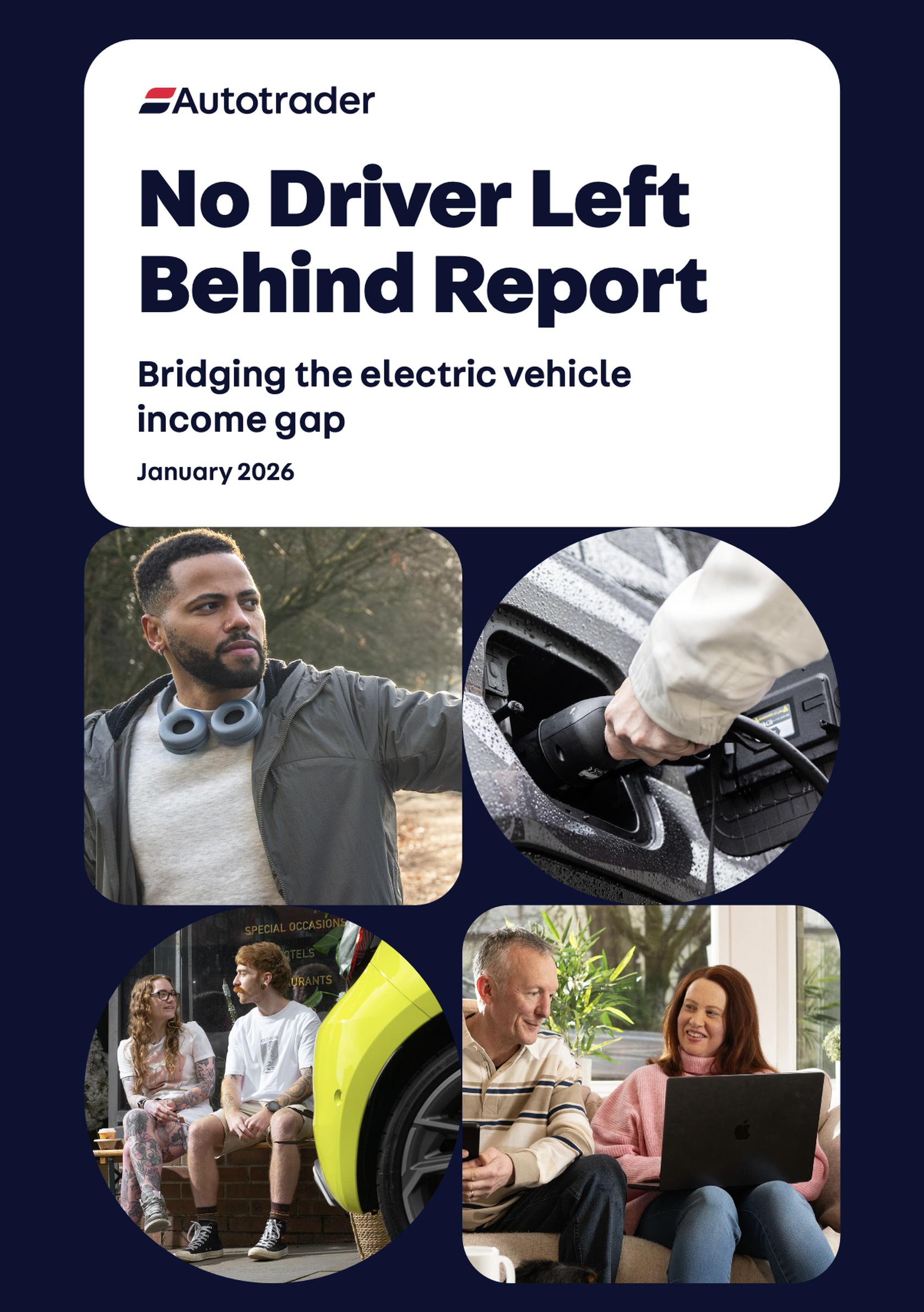
Lower-income households risk being left behind in the UK’s transition to electric vehicles (EVs), which could result in a structural divide in who benefits from cheaper running costs and cleaner local air, according to the latest No Driver Left Behind 2026 report from Autotrader.
Despite rapid growth in EV adoption and a maturing used EV market, households earning below £40,000 remain significantly less likely to consider an EV than higher-income households.
The report from automotive marketplace Autotrader identifies affordability and lack of awareness as the primary barriers to adoption. Its publication follows a Budget which threatens to make EVs more expensive from 2028, with proposals for a new pay-per-mile road tax adding to running costs as Labour attempts to tackle the reduced fuel duty income.
Nearly half of drivers (47%) said they were less likely to go electric following the Budget, compared to one third (34%) unchanged in views.
Headline findings from the Report include an income divide where only 48% of households earning under £40,000 would consider an EV for their next car, compared with 73% of all households above £40,000 – which rises to 84% for households earning above £80,000.
Despite the report also revealing that 70% of lower income households have a driveway, this suggests off-street parking is not the clear-cut indicator of electric consideration, or likelihood to buy, as previously thought.
For those who can charge at home, average annual running cost savings could reach £1,500, whilst drivers without this option face structurally high energy prices. Despite these potential savings, the new data shows many buyers with driveways may never get to the test-drive stage due to other factors.
Almost two-fifths of lower-income households buy cars priced £5,000 or less, yet just 1% of used EVs fall in that bracket today. Lower-income families are far less likely to know someone who drives an EV or to have driven one themselves, reinforcing perceptions of high cost and inconvenience.
With the UK’s median household income around £36,600 in 2024, these barriers are hitting the average family hardest and risk creating a structural divide in who benefits from cheaper running costs and cleaner local air. Lower-income households report limited hands-on exposure to EVs, so their perceptions of barriers like purchase price and charging convenience remain higher.
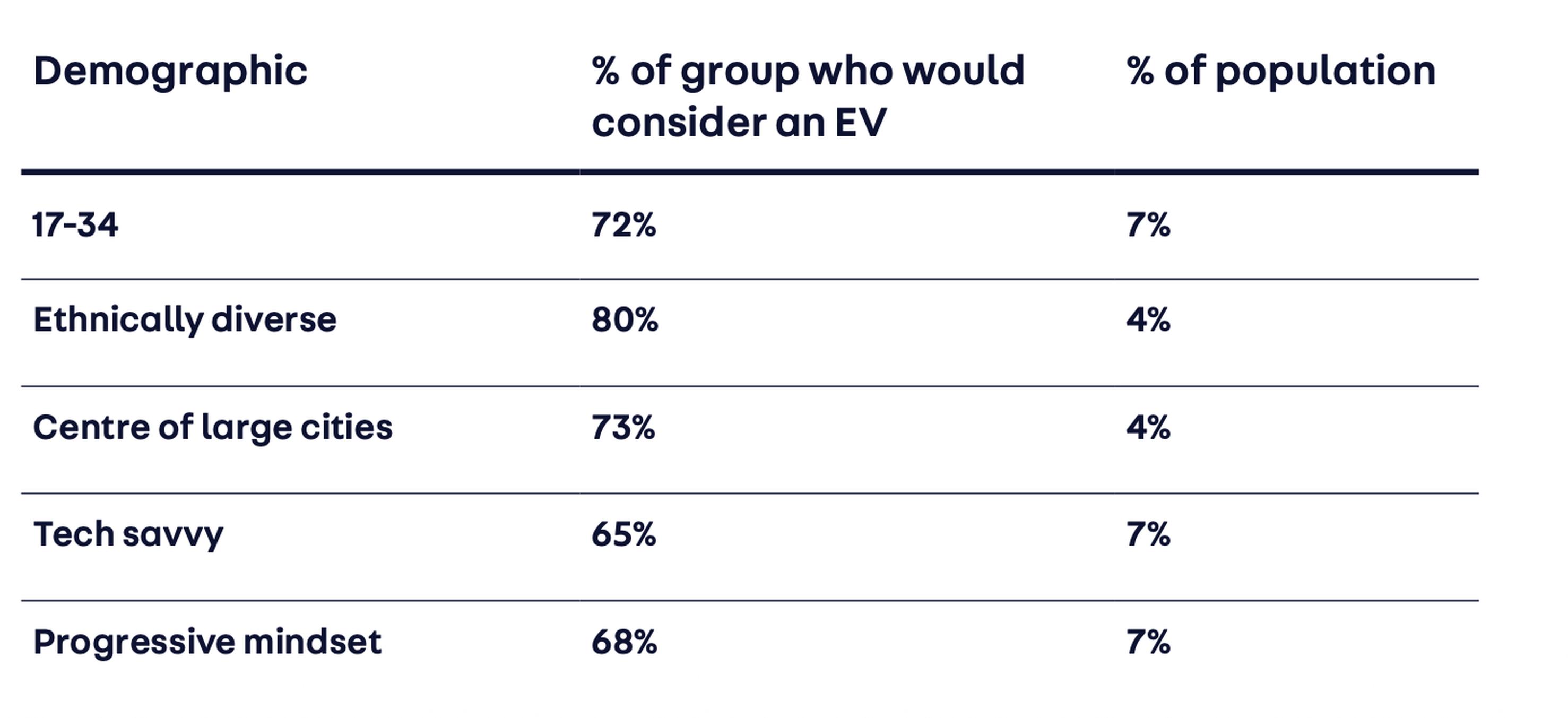
Research found that certain demographics within the lower household income group were more likely to consider electric, for example younger people and those living in urban environments.
The report concludes that without targeted action now on affordability, improving charging fairness by cutting VAT on public charging points, and cutting red tape for those without public charging, millions of drivers will remain excluded from the transition.
Ian Plummer, Autotrader’s chief customer officer, said: “We’re at a pivotal moment for the UK’s EV transition but there is still a lingering wealth divide. This new data also busts the myth that those who can charge at home will definitely switch – the driveway divide is no longer so clear cut. If lower income households can’t access affordable vehicles, we risk creating a two-tier system where the benefits of cleaner, cheaper motoring accrue to those already better off. The path forward is clear: more choice at lower price points, greater transparency on battery health metrics, and practical charging solutions for people without driveways. Do that, and we unlock EVs for everyone – not just the few.”
Vicky Read, chief executive of ChargeUK, said: “For the majority of people, charging an EV is affordable. But we need to make sure that the cost of public charging is not a blocker for the millions who don’t have the option to charge at home. The EV charging industry is committed to delivering affordable charging for all and constantly introducing new innovative ways to bring prices down, but the sector has been hit by a number of policy decisions that have sent costs soaring. The government has the opportunity to address this in its forthcoming review into the costs of public charging. It should be looking at equalising VAT with home charging, addressing surging charge point standing charges and including EVs in its renewable fuel credit scheme to help making driving an EV the cost-effective option for everyone.”
Vicky Edmonds, chief executive of EVA England, added: “It simply isn’t right that lower income households are priced out of electric when the sector as a whole is transitioning out of petrol and diesel at pace. This important report shows that if drivers are to consider the switch a number of basic considerations must be met, with affordability at the forefront. This can and should be done by ensuring the UK has a healthy and functioning second hand EV market, competitive upfront costs with attractive leasing packages, and affordable and reliable charging among a host of support measures needed at a crucial time for drivers.”

TransportXtra is part of Landor LINKS

© 2026 TransportXtra | Landor LINKS Ltd | All Rights Reserved
Subscriptions, Magazines & Online Access Enquires
[Frequently Asked Questions]
Email: subs.ltt@landor.co.uk | Tel: +44 (0) 20 7091 7959
Shop & Accounts Enquires
Email: accounts@landor.co.uk | Tel: +44 (0) 20 7091 7855
Advertising Sales & Recruitment Enquires
Email: daniel@landor.co.uk | Tel: +44 (0) 20 7091 7861
Events & Conference Enquires
Email: conferences@landor.co.uk | Tel: +44 (0) 20 7091 7865
Press Releases & Editorial Enquires
Email: info@transportxtra.com | Tel: +44 (0) 20 7091 7875
Privacy Policy | Terms and Conditions | Advertise
Web design london by Brainiac Media 2020
