
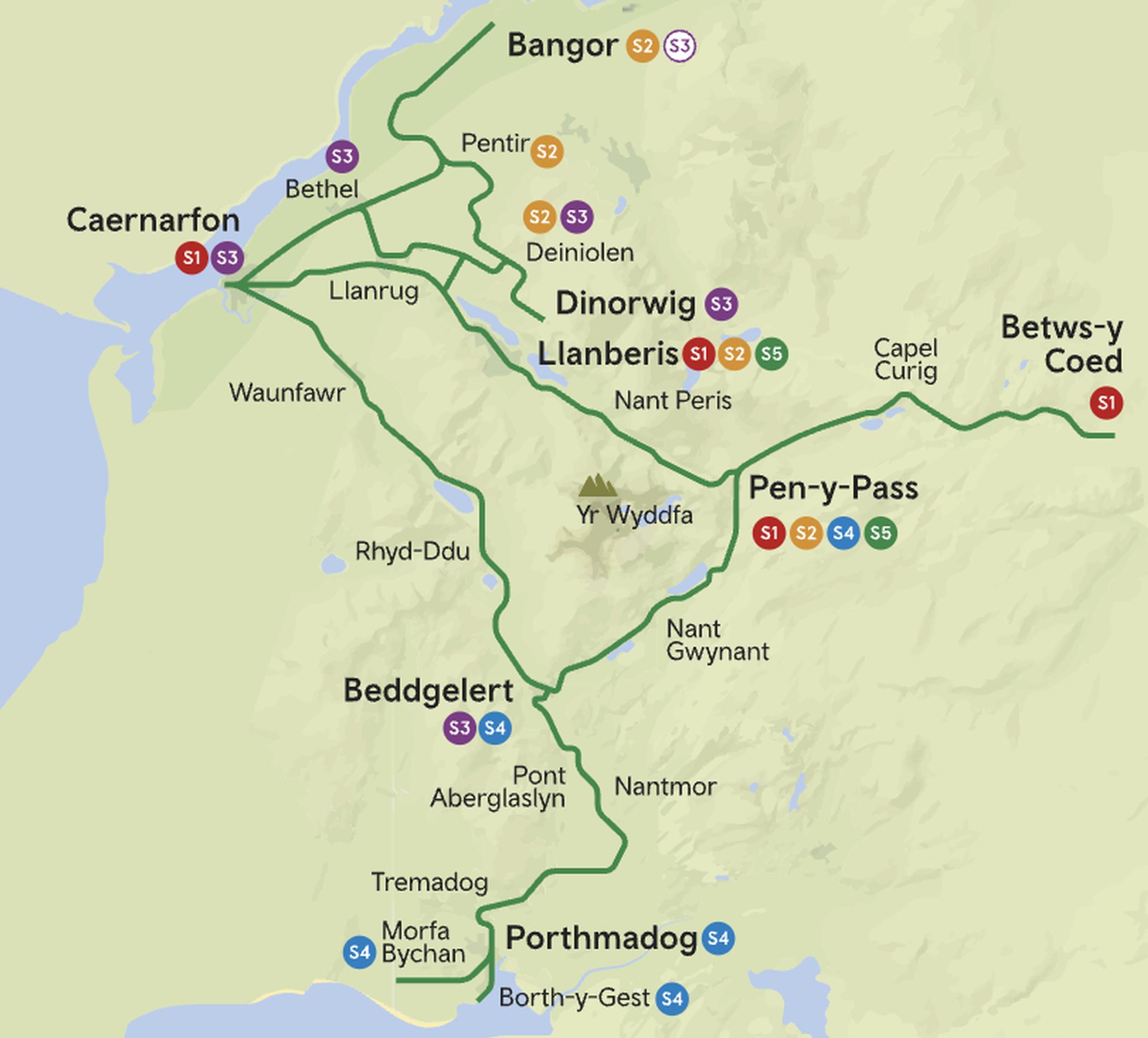
A new report called "Bus services in rural visitor destinations – what works", led by Alistair Kirkbride at Low Carbon Destinations CIC and Martin Higgitt at Martin Higgitt Associates, has set out what the rural visitor bus sub-sector looks like. The report was funded by a grant from the Foundation for Integrated Transport.
The authors say: "Bus services can be a core part of the visitor landscape of many rural destinations; there is real affection for many open-top services and long-established “ramblers”, and many services open up experiences such as 1-way walks and stress-free experiences.
"So how come up to 90% of journeys in these places are – stubbornly - still made by car, resulting in seasonal congestion and limited access for those without access to a car?"
The report describes the scale and variety of services in rural areas across the UK that serve visitor markets, sets out the nature of their benefits and identifies what might need to happen to maximise their benefits.
It tries to bring coherence to an otherwise disparate sector that isn’t well understood.
It pulls together a compendium of 248 services across the UK. There’s huge variety from commercial, branded, open-topped services with dedicated buses right through to independent grant-supported seasonal shuttles; some are part of integrated networks, others stand alone; some are community-led, others part of large commercial networks. What they have in common is them being part of the "mobility landscape" of rural visitor destinations.
The report also lays out a case for a demonstration programme to maximise the benefits and better understand how services in rural visitor areas can work better for visitors, residents and shift the scale of delivery for their local transport authority’s priorities.
1.There are hundreds of bus services that in some way could reasonably be described as visitor bus services.
2. There is a variety of types of visitor bus services. Some are stable and a part of the fabric of destinations, others are unstable and grant-dependent, some are deliberately building (and others have built) patronage to become viable. Whilst visitors and leisure use are important for all, the way that the different types of services are operated, their scale, stability, viability and marketing are often very different.
3. Because of the variety, services can learn from each other. The different cultural and economic contexts and scales of the different types of services mean that only looking at them together leads to some opportunities for ideas to transfer between them. How might commercial open-top services engage better with their resident communities? What can isolated Rambler services learn from commercial branding consistency? Could SITU’s bus stop WhatsApp group be an effective human face of real-time information?
4.Effective marketing is crucial for the success of visitor bus services. It is well known that people are more open to travel differently when at leisure, so targeting marketing in ways that make bus use appealing to the variety of types of visitors plus making information easily accessible is crucial to their success – and to realise the benefits and outcomes of the existence of the services.
Many visitor buses provide experiences, so the presentation of services as part of an experience is often important to their success – either on their own (the enjoyment of an open-top tour) or integration with access to attractions or locations.
5.There is a case to consider these together as a sub-sector. The scale, scope, variety and value of services mean that visitor bus services in rural areas are not generally seen as a coherent sub-sector. However, visitor bus services deliver on social, environmental and economic outcomes but the potential for maximising these outcomes is currently compromised because:
Together, these:
6. The paucity of robust evidence of impacts means making a strategic case for visitor buses is currently difficult.

TransportXtra is part of Landor LINKS

© 2026 TransportXtra | Landor LINKS Ltd | All Rights Reserved
Subscriptions, Magazines & Online Access Enquires
[Frequently Asked Questions]
Email: subs.ltt@landor.co.uk | Tel: +44 (0) 20 7091 7959
Shop & Accounts Enquires
Email: accounts@landor.co.uk | Tel: +44 (0) 20 7091 7855
Advertising Sales & Recruitment Enquires
Email: daniel@landor.co.uk | Tel: +44 (0) 20 7091 7861
Events & Conference Enquires
Email: conferences@landor.co.uk | Tel: +44 (0) 20 7091 7865
Press Releases & Editorial Enquires
Email: info@transportxtra.com | Tel: +44 (0) 20 7091 7875
Privacy Policy | Terms and Conditions | Advertise
Web design london by Brainiac Media 2020
