Monthly journal Parking Review has been the definitive source of news and intelligence on the UK and international public and private parking sectors since 1989.

Exploring European parking trends

EPA Parking Day(s) at Intertraffic Amsterdam 2026

Mark Moran
12 March 2026
EPA president Nigel Williams
Intertraffic Amsterdam


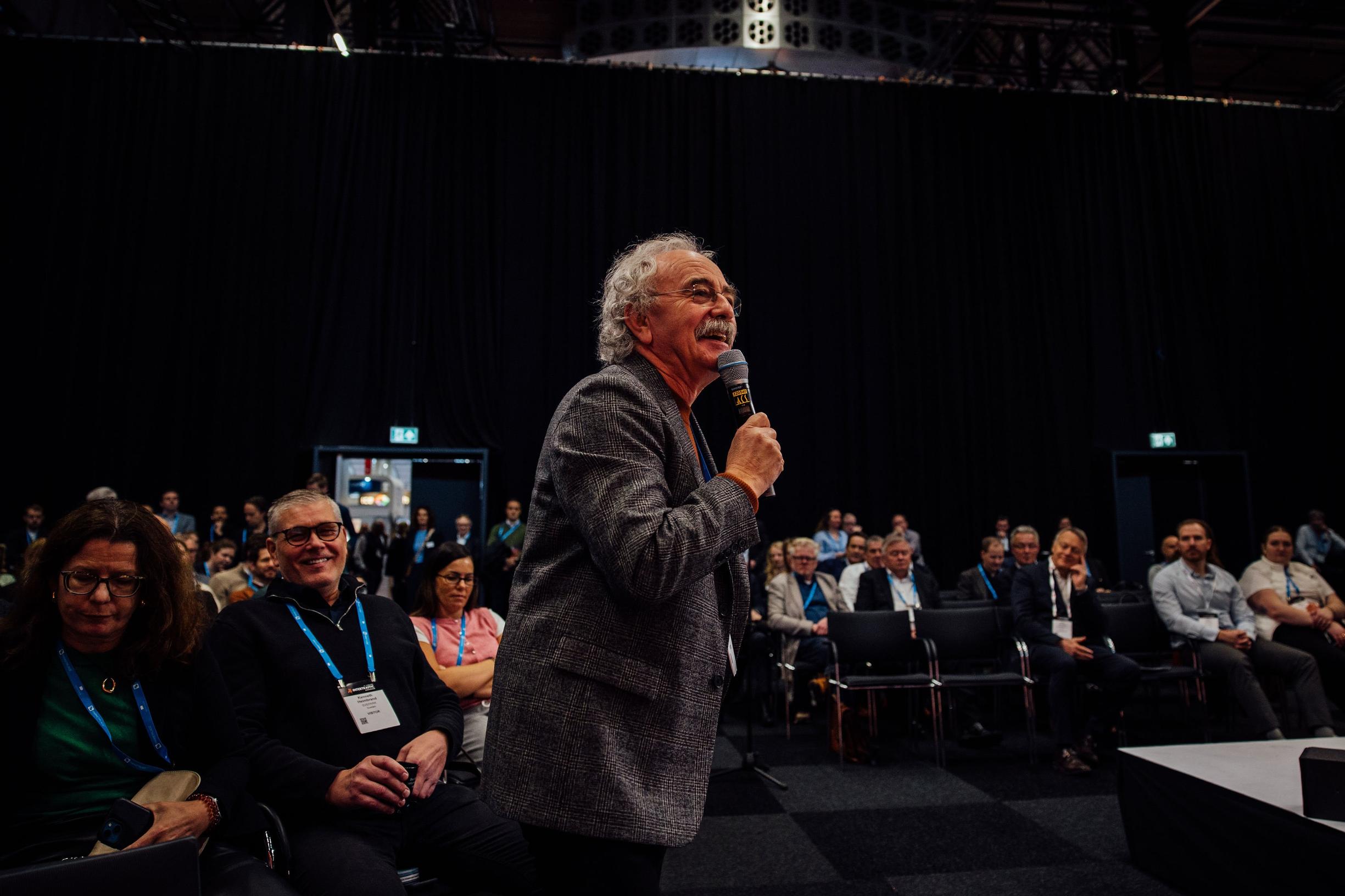
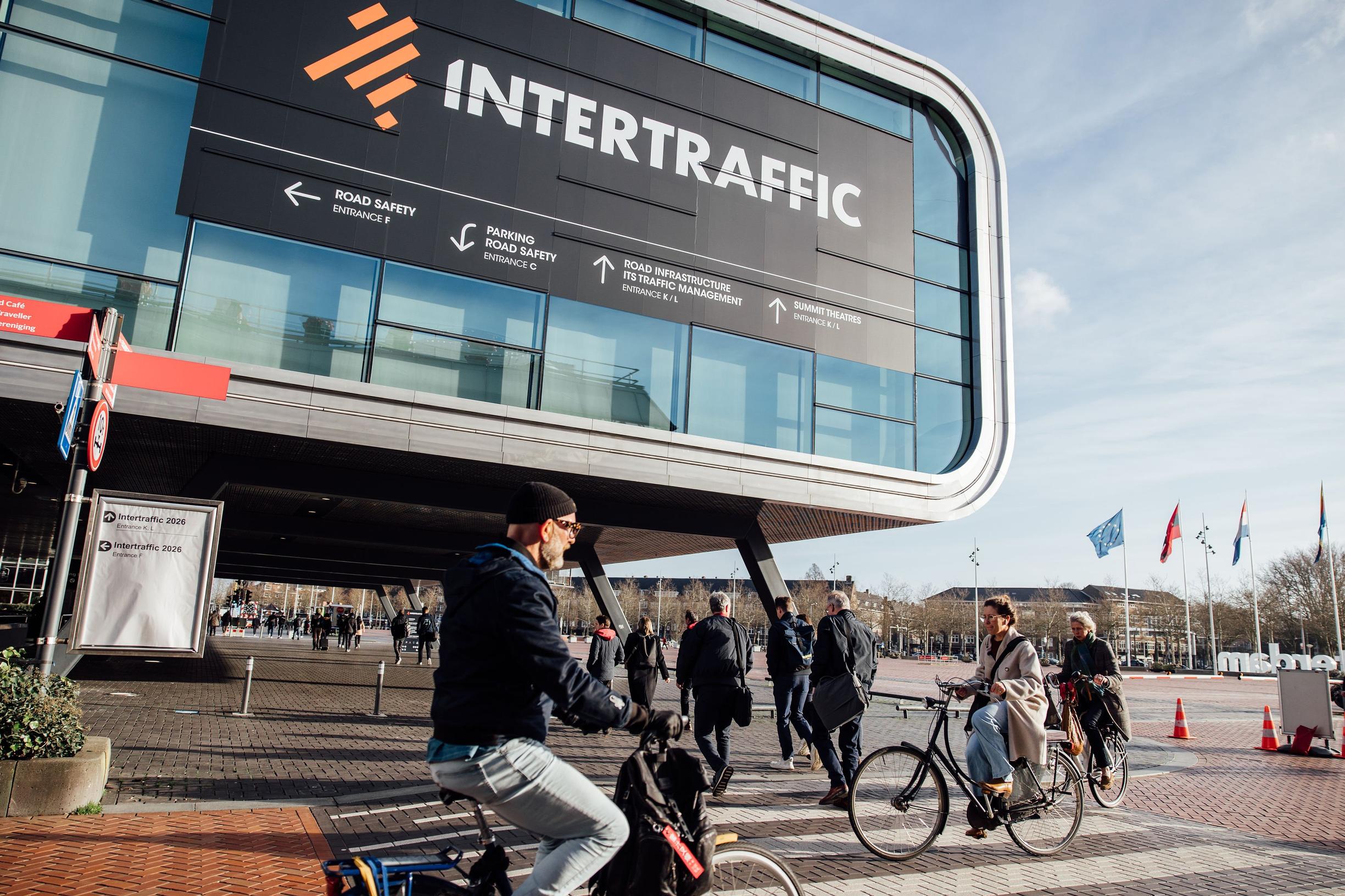
The European Parking Association (EPA) hosted a conference during Intertraffic Amsterdam. The EPA Parking Day sessions brought together industry leaders, city representatives and mobility experts to discuss key developments shaping the future of urban mobility and parking. 

The Parking Day(s) programme included three themed sessions at the Intertraffic Summit, two European Women in Parking (E-WiP) events, a members’ networking lunch and an EPA board meeting with representatives from close to 20 national parking associations, the EPA Full Members. 

European Women in Parking

The programme began on Tuesday 10 Marc with an E-WiP presentation by co-chairs Giovanna Piras (Automatic Systems/EPA Board Member) and Yasmin Jefferies (British Parking Association). They set out how the E-WIP initiative is gaining strong momentum, with nearly 80 members in the working group and more than 300 recipients of its quarterly newsletter.

Launched at the 21st European Parking Conference & Exhibition in Brussels last September, European Women in Parking aims to strengthen connections across the sector and support greater diversity and leadership within the industry. The co-chairs highlighted early progress, including the launch of the E-WiP mentoring program, which already brings together 22 participants from across the parking and mobility sector. They also encouraged participants to join the network, noting that formal EPA membership is not required.

Later that afternoon, around 40 participants gathered for the E-WiP networking cocktail. The event offered members an opportunity to meet in person, exchange experiences and strengthen professional connections across the European parking and mobility sector. 

Managing urban space

The Managing Urban Space session on ‘Sustainable Mobility and Logistics’ explored how cities can better organise increasingly complex urban environments to support more sustainable and efficient mobility systems.

The session featured Paola Cossu (FIT Consulting/ALICE) and Laurence Bannerman (AIPARK) and was moderated by Dr Giuliano Mingardo, Erasmus UPT, Rotterdam University (member of the EPA Scientific Committee). 

Speakers highlighted the importance of collaboration between retailers, service providers, local authorities and mobility operators to share data, infrastructure and resources, helping cities optimise delivery routes, vehicle loads and kerbside use.

Paola Cossu emphasised the importance of strengthening cities’ planning capacity and making better use of existing mobility data. The EU-funded DISCO project was presented as an important step toward developing a European freight data space that enables stakeholders to share essential information while maintaining control over sensitive data. She noted: “If we think that something can change, the only way we can do it is together.”

Laurence Bannerman highlighted the role of the parking sector in supporting more effective kerbside management and coordinated urban planning, while insights from another EU-funded project in which EPA is a partner, GOLIA, explored new governance models for sustainable urban mobility and logistics. 

Integrated approaches

EPA Parking Day continued on 11 March with the session ‘Where Traffic Management Meets Parking Management: An Integrated Approach’. The discussion addressed a key challenge in urban mobility: traffic and parking are often managed separately, even though they shape the same urban environment and mobility experience.

Moderated by EPA president Theo Thuis (MD innovation at Q-Park), the session highlighted the growing pressure on cities to manage their limited urban space. With rising populations, access regulations, charging schemes and evolving mobility patterns, the amount of available road and parking space has not increased.

Thuis highlighted the potential role of national parking registers or platforms in helping cities manage access rights and parking permissions more effectively. He said: “Parking management is fundamentally about managing urban space.”

Tamara Djukic (TM2.0/ERTICO) highlighted the growing role of digital systems in mobility management. Stressing the need for greater harmonisation of industry policies, she said: “Cities are moving towards digital access control.”

From the city perspective, Willem van Heijningen (City of Amsterdam) explained how Amsterdam is adapting mobility policies to a growing population and limited urban space, prioritising active travel and public transport, while ensuring commensurate parking management policies.

Daniel Sevenhans (City of Antwerp) emphasised the need for cities to join up their data sources and to take stronger control of their urban access systems. “Cities need to get control over what is happening in their streets,” he warned.

Industry perspectives from Michael Koufopoulos (Yunex Traffic) and Bart Lannoo (Be-Mobile) highlighted how digital tools, access management systems and mobility rights platforms can support more coordinated traffic and parking management. Koufopoulos noted that access policies are becoming increasingly complex: “It is no longer black and white.”

The session concluded with a discussion led by Olivier Asselin (Lille Metropole and chairman of the POLIS Parking WG) on pricing transparency and digital parking services.

Theo Thuis emphasised that “cities are always in control of their tariffs,” while participants agreed that greater transparency and clearer governance of dynamic tariffs and digital platforms will be essential as cities introduce more advanced access management systems. Tamara Djukic concluded: “Transparency will be one of the key issues cities need to focus on going forward.” 

A space for Artificial Intelligence 

The final Parking Day session focused on ‘AI in Mobility and Parking’, one of the most discussed topics in the sector. 

Moderated by Dr Mark Friesen (Quinta Consulting), the session reflected growing interest in how artificial intelligence (AI) is reshaping parking and mobility systems, with a focus on several use cases at different levels of maturity.

Friesen noted that parking is already a data-driven industry, but many organisations are still at an early stage of AI adoption. A recent industry survey showed that around 40% of organisations are not yet using AI, while revenue optimisation is currently the leading use case.

Several speakers explored how AI could improve the parking experience for both cities and drivers. Duncan Licence (Arrive) described how AI can help all drivers “park like a local,” using real-time data to guide motorists to suitable parking options and reduce the time spent searching for spaces.  “Finding parking is the biggest driver pain point out there right now,” he said.

From the automotive perspective, Manu Bhargava (Valeo) and Thorsten Schmitt (BMW) emphasised the need for open ecosystems linking vehicles and parking infrastructure to support further automation, underpinned by shared standards such as Alliance for Parking Data Standards (APDS). Bhargava noted that vehicle connectivity is expanding rapidly, predicting that nearly all vehicles will be connected by 2030.

Industry expertise from Thomas Pühringer (SKIDATA) and Anthony Cashel (PayByPhone) highlighted how technologies such as automatic number plate recognition (ANPR), connected vehicles and mobile payments are already transforming parking services. 

“The technology is there,” Thomas Pühringer noted, adding that the challenge is ensuring these innovations deliver real value for cities and users.
Research presented during the session suggested that guiding drivers directly to available parking spaces could save up to 35 minutes of individual travel time, helping reduce congestion and unnecessary search traffic in cities.

Looking ahead, panellists shared their vision of how parking may evolve as vehicles become increasingly connected and automated. Thorsten Schmitt (BMW) suggested: “In the future, drivers may not need to think about parking at all.”

As the session concluded, participants received copies of the new EPA Manifesto 2025-2030, marking its debut in print. The document outlines EPA’s vision, recommendations and key policy priorities for the parking and urban mobility sector.

Making connections

Following the Wednesday morning sessions, EPA members and invited partners gathered for a networking lunch in the First Floor restaurant, where more than 120 participants exchanged ideas and reconnected with colleagues from across the sector.

The afternoon concluded with an EPA Board meeting with representatives from the national parking associations (EPA Full Members). Among the topics discussed was the location of the 22nd European Parking Conference & Exhibition, scheduled for 28-30 September 2027. 

The EPA board confirmed that the event will once again take place in Brussels, due to its central location, proximity to European institutions and convenient accessibility for EPA members from across Europe.

The European Parking Association (EPA), originally founded in 1983, is the umbrella organisation for Europe’s national parking associations and the wider parking and urban mobility sector. EPA member associations (Full Members) represent the parking sector as a whole, which consists of public bodies and private companies that are operating and managing on-street and off-street parking structures and services. EPA Corporate Members represent the major operators and supply industry that offer all related products and services concerned with parking. 

www.europeanparking.eu

 
Search


TransportXtra is part of Landor LINKS

© 2026 TransportXtra | Landor LINKS Ltd | All Rights Reserved

Subscriptions, Magazines & Online Access Enquires
[Frequently Asked Questions]
Email: subs.ltt@landor.co.uk | Tel: +44 (0) 20 7091 7959

Shop & Accounts Enquires
Email: accounts@landor.co.uk | Tel: +44 (0) 20 7091 7855

Advertising Sales & Recruitment Enquires
Email: daniel@landor.co.uk | Tel: +44 (0) 20 7091 7861

Events & Conference Enquires
Email: conferences@landor.co.uk | Tel: +44 (0) 20 7091 7865

Press Releases & Editorial Enquires
Email: info@transportxtra.com | Tel: +44 (0) 20 7091 7875

Privacy Policy | Terms and Conditions | Advertise

Web design london by Brainiac Media 2020