
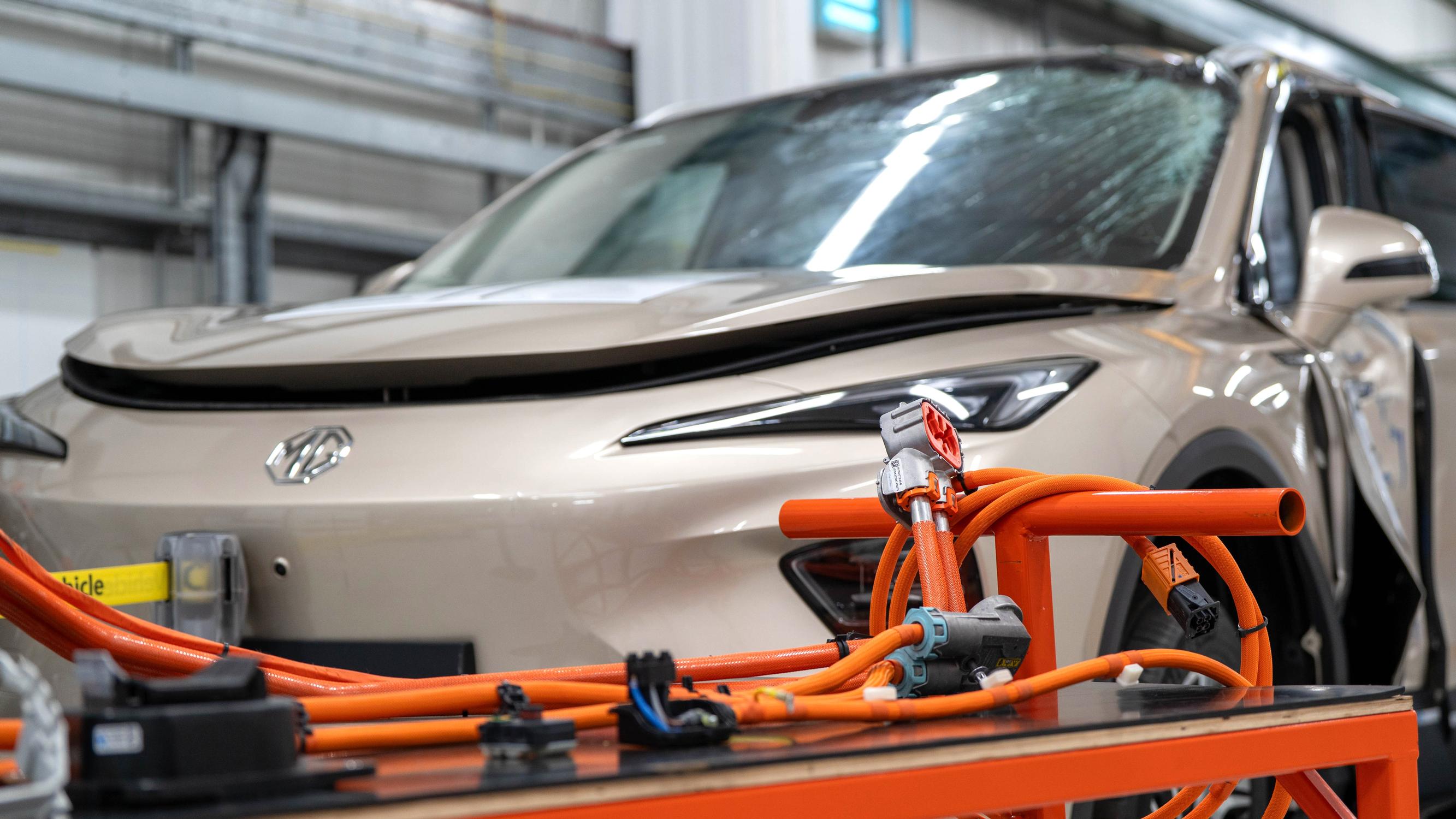
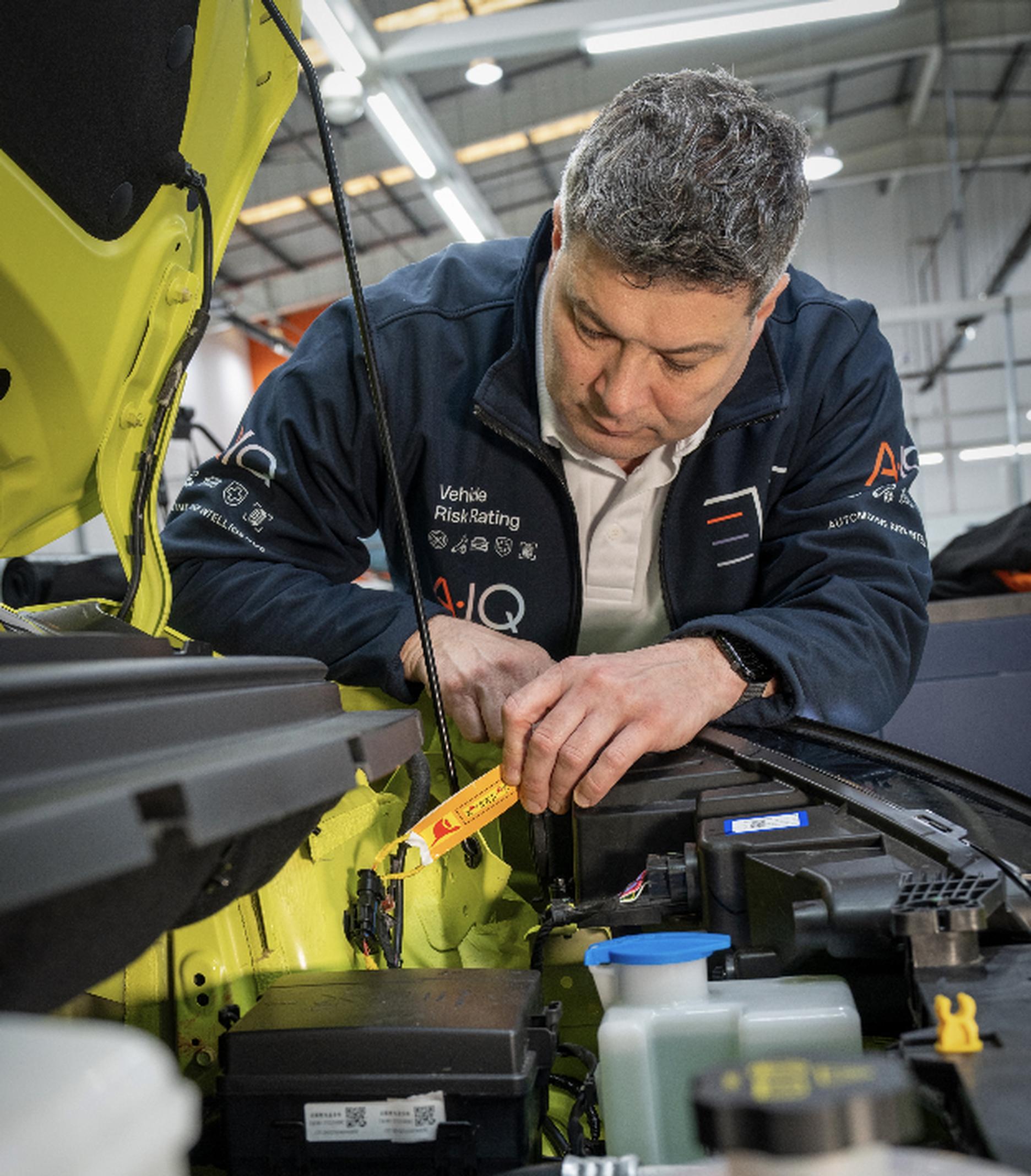
Safety and crash testing specialist Thatcham Research has developed a strategy to cut the number of electric vehicles being written off by insurers.
The EV Blueprint sets out to lower insurance costs through cheaper repairs and fewer total losses. The blueprint sets out eight requirements for the automotive industry, designed to ensure battery electric vehicles can be safely assessed, efficiently repaired and economically maintained throughout their lifecycle.
The automotive industry has made progress over the past five years in understanding EVs and implementing essential safety measures in the case of collisions. First responders now have access to clear protocols for managing EVs at road traffic accidents, with comprehensive training available to enable safe isolation of high-voltage systems and management of potential thermal runaway risks.
Similarly, repair centres across the UK can readily identify electric vehicles and understand the fundamental safety requirements to protect technicians working on high-voltage systems. The industry has gained confidence in handling EVs, and the focus has shifted from basic safety awareness to the need for more efficient recovery, assessment, and repair processes that make economic sense.
However, to achieve increased efficiency, some operational challenges remain. A recent Thatcham Research survey, conducted in partnership with the Centre for Economics and Business Research (CEBR), reveals that battery-related issues remain the primary concern for 44.6% of insurers and 41.7% of repair professionals.
With batteries accounting for up to 40% of a vehicle's total value, even minor collision damage can result in total loss determinations, particularly as vehicles depreciate over time.
Dan Harrowell, principal engineer, advanced technologies Thatcham Research, said: "How affordable it is to insure these cars largely relies on how well the industry can handle repairs after accidents. As repair shops have become more experienced with electric vehicle technology, the costs of fixing these cars have already decreased by 10.7%.
“To continue making insurance more affordable as more electric vehicles hit the roads, car manufacturers, insurance companies and repairers need to keep collaborating to overcome any remaining challenges. This blueprint provides the roadmap for that collaboration, ensuring we can deliver both the environmental benefits of electrification and the economic sustainability that consumers need.”
The EV Blueprint was developed based on extensive industry consultation and data, including insights from the 2025 CEBR consumer and industry study and research from leading industry bodies. It represents a collaborative effort to establish best practices that will support the UK's transition to electric mobility.
The EV Blueprint outlines eight essential recommendations:
The recommendations outlined in the EV Blueprint are underpinned by three essential principles:
Thatcham Research's EV Blueprint presents a three-year-old EV that has sustained minor side impact damage to the HV battery bracket. Current mandated procedures frequently result in total loss because battery casing damage requires a replacement with a new battery which costs more than the car is worth. For a true circular economy, the battery casing would be repaired without pack removal or replaced with a significantly lower cost refurbished units which would get the car back on the road.
The potential for EV batteries to have a very long operational life has been underlined by a report by Generational, which has tested more than 8,000 electric cars and light commercial vehicles. It found that 8-9-year-old vehicles retain a median 85% battery capacity, compared to new, while the median battery state of health for 4-5-year-old EVs was 93.53%.
“This represents an achievable future state,” said Dan Harrowell. “The vehicle returns to service promptly, the customer retains their vehicle, salvage values improve and environmental impact is substantially reduced compared to manufacturing a new battery. Real-world data is showing that batteries can have a very long usable life that we should try to maximise through sustainable repair.”
The framework addresses two fundamental challenges: post-collision diagnosis and assessment, and post-collision repair execution. By tackling these issues, the blueprint aims to reduce total loss rates, improve salvage and residual values and ultimately influence insurance premium structures.
The initiative calls on vehicle manufacturers, battery manufacturers, repairers, insurers and training providers to adopt these recommendations, ensuring the electrification transition remains economically sustainable for both industry and consumers.
Jonathan Hewett, chief executive of Thatcham Research, said: “The transition to electric vehicles represents one of the most significant transformations our industry has ever undertaken, but it cannot succeed if EVs become economically unviable to insure and repair. We're seeing too many repairable vehicles written off simply because current designs don't accommodate efficient assessment and repair processes.
“Our Electric Vehicle Blueprint is the result of carrying out real-world EV impact assessments and repair procedures, in-house for more than a decade. These are practical, evidence-based recommendations to overcome three-year-old EVs being written off unnecessarily because of minor battery casing damage. This impacts consumer confidence and, fundamentally, undermines the sustainability credentials that make electrification so important in the first place.
“The eight recommendations we've outlined are entirely achievable. We already see these principles working in conventional vehicles – resettable safety systems, accessible diagnostics, serviceable components. There's no technical reason why EVs can't meet the same standards. What we need now is industry-wide commitment to designing vehicles that can be safely assessed, efficiently repaired, and economically maintained throughout their entire lifecycle.
“We want to work with vehicle and battery manufacturers to create a genuinely sustainable electric vehicle ecosystem. Not just sustainable in terms of emissions, but sustainable economically and practically for the millions of consumers who will depend on these vehicles in the years ahead.”

TransportXtra is part of Landor LINKS

© 2026 TransportXtra | Landor LINKS Ltd | All Rights Reserved
Subscriptions, Magazines & Online Access Enquires
[Frequently Asked Questions]
Email: subs.ltt@landor.co.uk | Tel: +44 (0) 20 7091 7959
Shop & Accounts Enquires
Email: accounts@landor.co.uk | Tel: +44 (0) 20 7091 7855
Advertising Sales & Recruitment Enquires
Email: daniel@landor.co.uk | Tel: +44 (0) 20 7091 7861
Events & Conference Enquires
Email: conferences@landor.co.uk | Tel: +44 (0) 20 7091 7865
Press Releases & Editorial Enquires
Email: info@transportxtra.com | Tel: +44 (0) 20 7091 7875
Privacy Policy | Terms and Conditions | Advertise
Web design london by Brainiac Media 2020
