
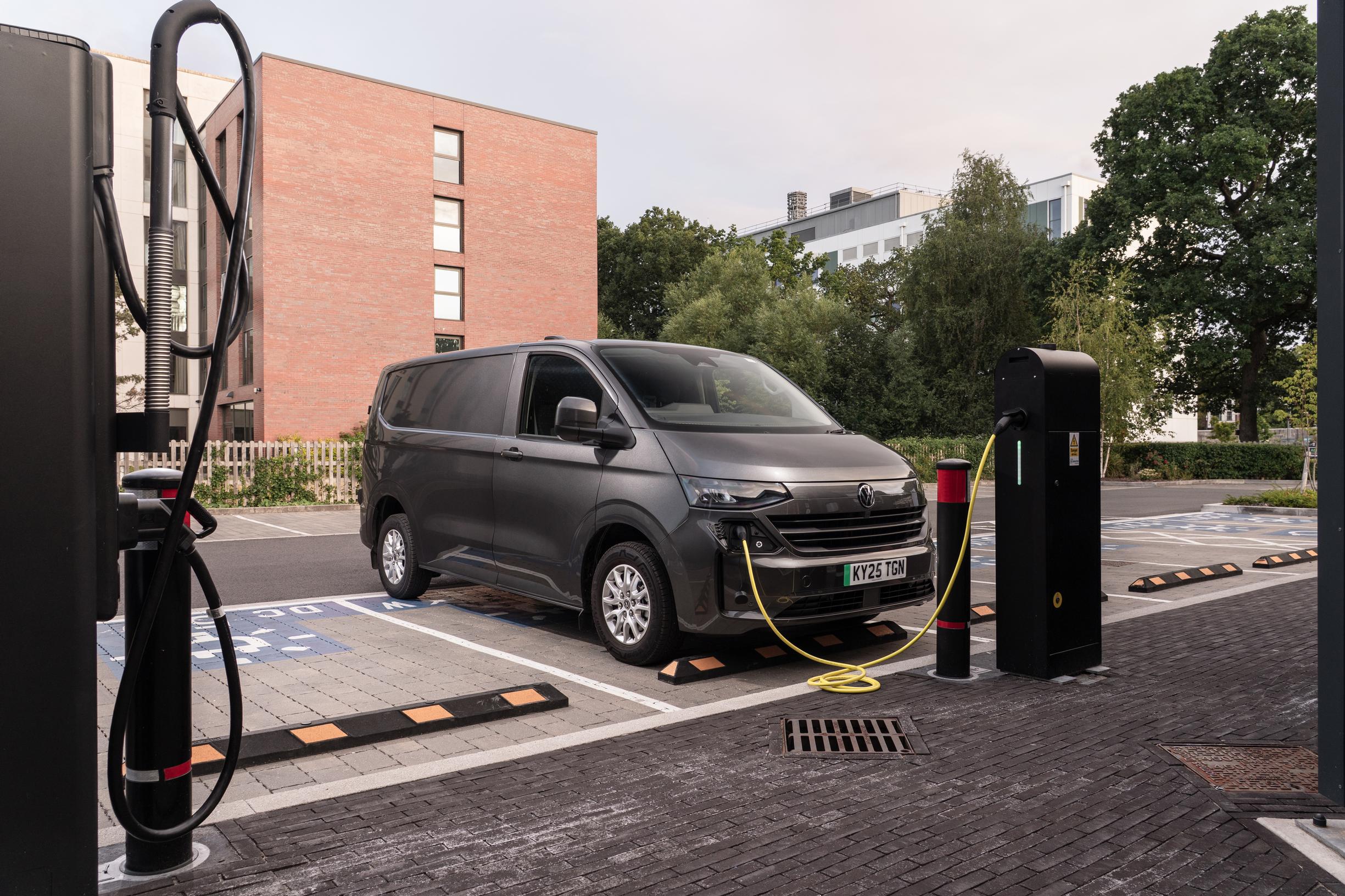
The extra weight from the batteries in electric vans means they are currently classified as HGVs, and the increased legislative burden is inhibiting their adoption in commercial fleets.
The government announcement follows the outcome of a consultation on regulatory flexibility for zero-emission vans that has recommended changing legislation which classifies electric vans as HGVs due to extra battery weight.
The decision was greeted by Logistics UK as a “victory for the environment and common sense.”
Between 24 December 2024 and 3 March 2025, the Department for Transport (DfT) ran a consultation on proposals to amend regulations which apply to large zero-emission goods vehicles with a maximum authorised mass (MAM) of over 3.5 tonnes, up to and including 4.25 tonnes.
Due to the extra weight of the battery or other zero-emission technology, these vehicles are often heavier than an equivalently sized, and equivalently used, internal combustion engine (ICE) vehicle. This extra weight may move the zero-emission vehicle above the 3.5t threshold, over which additional regulatory requirements for heavy goods vehicles apply. In this consultation response ‘3.5 to 4.25t’ is used to describe vehicles weighing over 3.5t, up to and including 4.25t.
Some industry stakeholders have stated that they are not transitioning to zero-emission vehicles because they are subject to additional regulation compared to their internal combustion-engined (ICE) counterparts. They stated that this is slowing down the fleet’s transition to zero-emission vehicles.
The review provided an opportunity for road safety considerations to be raised. Data on the road safety implications of these measures are limited. Any future reforms will be subject to post implementation review to allow consideration of any future road safety impacts.
The proposals made in the consultation would affect the existing rules in two main areas:
The consultation also sought views on the speed limiter rules which apply to these vehicles (although no specific proposals for change were made in the consultation) and other vehicle classes that may experience similar issues as 3.5 to 4.25t zero-emission vehicles.
The proposals in the consultation would apply to Great Britain only, as the Northern Ireland Executive has legislative competence in these areas in Northern Ireland.
Chris Yarsley, senior policy manager, road freight regulation at Logistics UK said: “The current situation where standard size electric vans are treated as HGVs, in terms of MOT and driver hours requirements, is nonsensical and is limiting the adoption of cleaner electric vehicles. It is only the extra weight from the batteries that moves electric vans into the same category as HGVs, and from an operational point of view, the vehicles are the same as diesel and petrol equivalents.
“The proposals published in the consultation response will give operators the confidence to invest in cleaner electric vans as they remove the additional costs from adhering to legislation designed for HGV operators – it is a victory for the environment and common sense.
“Logistics UK has long been campaigning for full regulatory alignment between 4.25 tonne electric vans and 3.5 tonne diesel, and as part of the Zero-Emission Van Plan coalition we work to remove regulatory barriers and improve fiscal support for adopting electric vehicles. The outcomes from the consultation are a clear indication that the government is listening to the sector’s concerns, and it is now essential for the recommendations to be adopted in law as quickly as possible.
“We also welcome recognition of our long-standing policy position on expanding the current light goods vehicle N1 classification to include electric vans up to 4.25 tonnes, and this will form part of our continuing discussions with the Department of Transport.”

TransportXtra is part of Landor LINKS

© 2026 TransportXtra | Landor LINKS Ltd | All Rights Reserved
Subscriptions, Magazines & Online Access Enquires
[Frequently Asked Questions]
Email: subs.ltt@landor.co.uk | Tel: +44 (0) 20 7091 7959
Shop & Accounts Enquires
Email: accounts@landor.co.uk | Tel: +44 (0) 20 7091 7855
Advertising Sales & Recruitment Enquires
Email: daniel@landor.co.uk | Tel: +44 (0) 20 7091 7861
Events & Conference Enquires
Email: conferences@landor.co.uk | Tel: +44 (0) 20 7091 7865
Press Releases & Editorial Enquires
Email: info@transportxtra.com | Tel: +44 (0) 20 7091 7875
Privacy Policy | Terms and Conditions | Advertise
Web design london by Brainiac Media 2020
