
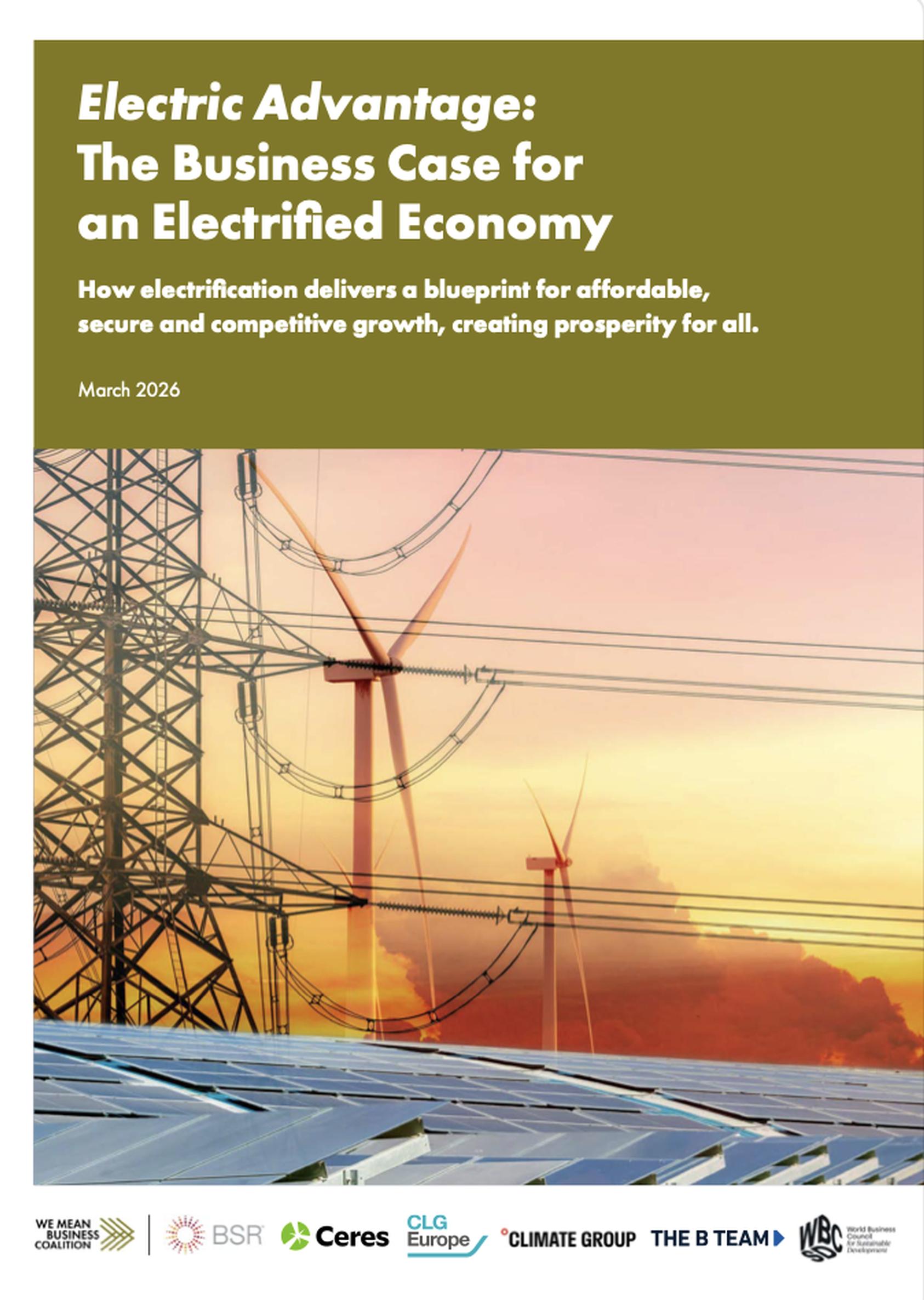
Electrification is rapidly becoming the operating system of modern economies, says the We Mean Business Coalition in a white paper setting out how clean electrification can reshape energy systems and economic competitiveness in the coming decade.
Electric Advantage: The Business Case for an Electrified Economy points out the electricity increasingly powers transport, buildings, industry and digital infrastructure. This means for business, access to abundant, affordable clean electricity is becoming central to operating costs, investment decisions and global competitiveness.
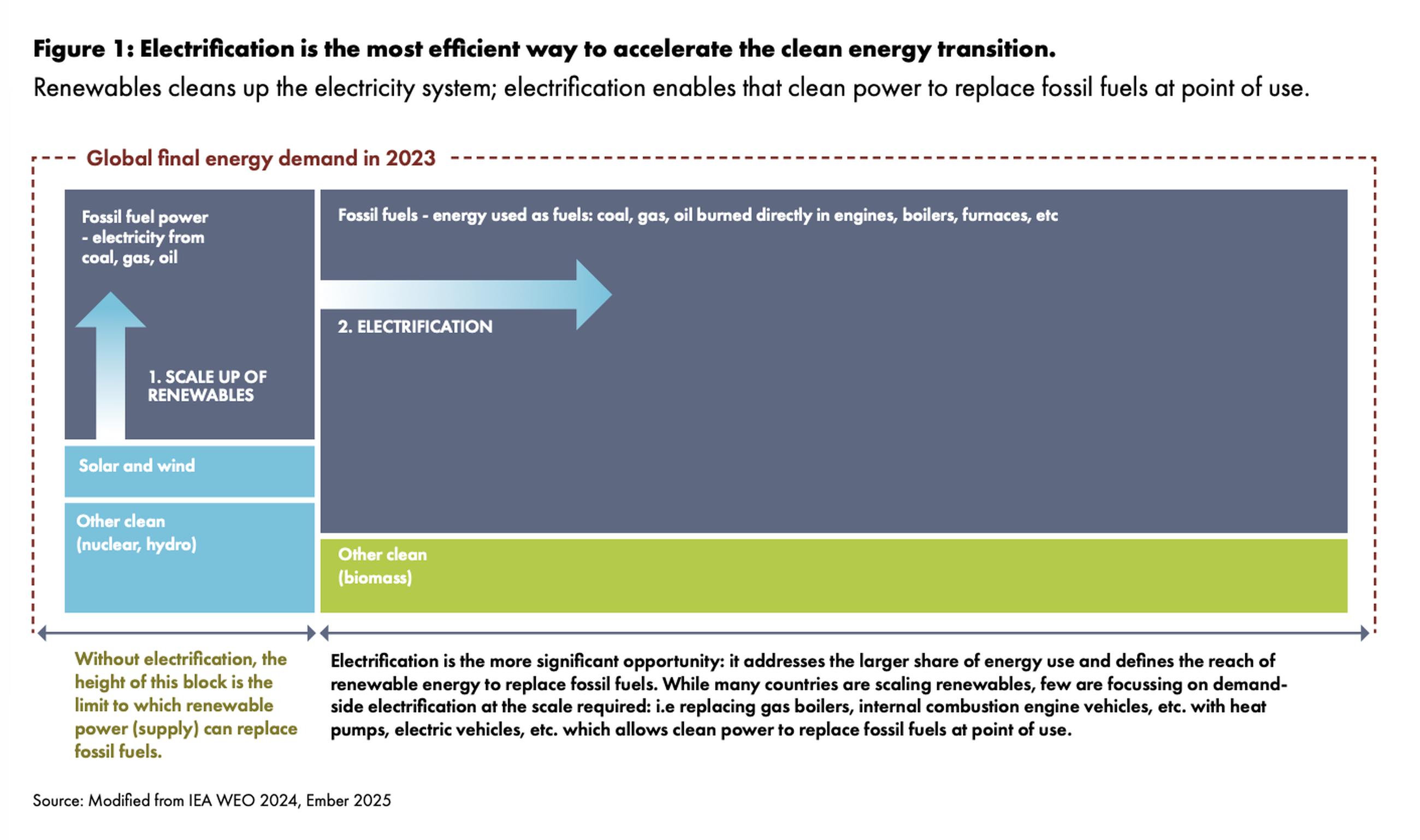
The white paper highlights that electrification can displace around 60% of global fossil fuel use and energy-related emissions while lowering energy costs and strengthening resilience to geopolitical shocks.
With 74% of the global population living in countries that are net importers of fossil fuels, shifting to electrification powered by domestic clean electricity offers a pathway to reduce exposure to volatile global commodity markets while supporting economic growth.
Maria Mendiluce, chief executive of the We Mean Business Coalition said: “The volatility we are seeing in global energy markets is a reminder of how exposed modern economies remain to fossil fuel shocks. Electrification powered by clean electricity offers a way to reduce that exposure while strengthening competitiveness and energy security.
“As electricity becomes the backbone of economic growth, accelerating electrification will require businesses and policymakers to move together – aligning investment, infrastructure and policy so transport, buildings and industry can electrify at scale.”
We Mean Business Coalition is a group of seven non-profit organisations: BSR, CDP, Ceres, Climate Group, CLG Europe, The B Team and WBCSD. It seeks to catalyse business and policy action to halve emissions by 2030 and accelerate an inclusive transition to a net zero economy.
The coalition’s white paper states electrification should be central to economic and competitiveness strategy, reshaping how energy is produced, traded and used across the global economy. For the first time in three decades, excluding periods of crisis-related disruptions, global electricity demand outpaced economic growth in 2024 – a shift the International Energy Agency expects to become a broader trend in the coming years.
Electrification readiness is becoming an important factor in competitiveness. Investors and manufacturers are increasingly looking not just at whether clean electricity is available and affordable, but whether countries can use it across their economies - electrifying transport, buildings and industry to lower costs, strengthen energy security and attract investment.
At the same time, today’s fossil fuel system remains highly inefficient. The paper highlights that almost two-thirds of energy is wasted in the process of converting fossil fuels into usable energy forms. Electrified technologies can deliver the same services – from mobility to heating – with far less energy, improving productivity and reducing operating costs across the economy.
Electrification can also deliver direct benefits for households. By replacing combustion technologies with more efficient electric alternatives such as electric vehicles and heat pumps, electrification could free the equivalent of 3–5% of household income each year while improving air quality and reducing exposure to energy price shocks.
To accelerate progress, the paper also launches a new We Mean Business Coalition programme. Electric Advantage is focused on accelerating the shift to electrified economies. It aims to align electricity demand with clean power supply and grid readiness - helping economies lower energy costs, strengthen energy security, improve air quality and support long-term prosperity.
Electric Advantage will mobilise businesses, governments and investors around the policies, infrastructure and market conditions needed to scale electrification across transport, buildings and industry.
The programme aims to build a coordinated business voice on demand-side electrification – the shift in how energy is used across transport, buildings and industry – complementing global efforts to expand clean electricity supply.
Sir Ian Cheshire, chair of the We Mean Business Coalition, said: “Electrification is quickly becoming a source of competitive advantage for businesses. Companies that move early will benefit from lower operating costs, greater resilience to energy price shocks and stronger positions in global markets. Electric Advantage aims to remove the barriers to companies scaling that opportunity - accelerating investment and turning electrification into a driver of growth.”
The Electric Advantage programme will focus on three priorities:
Alongside the launch of the paper and programme, business leaders in Europe have released a joint statement calling for stronger EU electrification policy as part of the forthcoming Electrification Action Plan.
The statement coordinated by WMBC partner CLG Europe highlights the need for clear investment signals, grid expansion, regulatory stability and stronger carbon pricing to accelerate electrification across European industry and infrastructure.
Both initiatives launched at the Green Growth Summit 2026, in Brussels, bringing together senior business leaders, policymakers and investors to discuss Europe’s economic strategy in the clean energy transition. Speakers included Simon Stiell, executivesSecretary of the UN Framework Convention on Climate Change.
TransportXtra is part of Landor LINKS

© 2026 TransportXtra | Landor LINKS Ltd | All Rights Reserved
Subscriptions, Magazines & Online Access Enquires
[Frequently Asked Questions]
Email: subs.ltt@landor.co.uk | Tel: +44 (0) 20 7091 7959
Shop & Accounts Enquires
Email: accounts@landor.co.uk | Tel: +44 (0) 20 7091 7855
Advertising Sales & Recruitment Enquires
Email: daniel@landor.co.uk | Tel: +44 (0) 20 7091 7861
Events & Conference Enquires
Email: conferences@landor.co.uk | Tel: +44 (0) 20 7091 7865
Press Releases & Editorial Enquires
Email: info@transportxtra.com | Tel: +44 (0) 20 7091 7875
Privacy Policy | Terms and Conditions | Advertise
Web design london by Brainiac Media 2020